

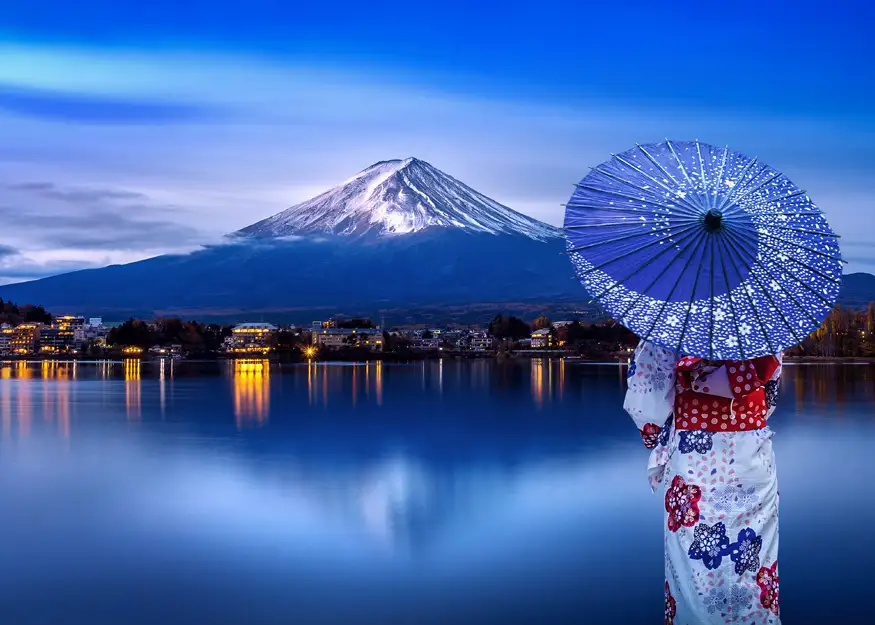
There are journeys that allow you to get to know a destination and others that help you understand an entire part of the world. A China and Japan tour undoubtedly belongs to the second category. Not only because it allows you to visit some of the most fascinating cities in East Asia, but above all because it brings the traveller face to face with two civilisations which, while sharing centuries of history and mutual influence, have developed very different ways of interpreting society, beauty, the relationship with the past and even the idea of the future.
For many Europeans, China and Japan are still perceived as somehow similar. After all, both preserve ancient traditions, great metropolises, a thousand-year-old culture and a strong bond with their own identity. Yet a few days spent between Osaka, Kyoto, Tokyo, Beijing, Xi’an and Shanghai are enough to realise that the differences are often more surprising than the similarities.
It is precisely this continual comparison that makes a combined China and Japan trip something far more interesting than a simple holiday. Each stop adds a piece to a story of two nations that are geographically close but, once you look beneath the surface, profoundly different in the way they see the world.
Two countries that share their roots, but not their character
The histories of Japan and China have been intertwined for more than a thousand years. Many of the elements that helped shape Japanese culture came from the mainland: writing, Buddhism, certain administrative models and many schools of philosophy reached the archipelago through a long process of cultural exchange.
But Japan has always had an extraordinary capacity to absorb outside influences and transform them into something unique. It is a trait that emerges clearly from the very first stops on the journey.
In Osaka, a lively, modern city, the visitor immediately comes into contact with a Japan of technology, vast shopping spaces and animated districts such as Dotonbori. Yet behind the urban dynamism one senses a constant search for harmony. People move according to unwritten rules, public spaces are shared with natural respect, and even in the most crowded areas there is a surprising sense of order.
It is a very different approach from the one you encounter a few days later in China, where urban life seems more spontaneous, more direct, more energetic. It is not a question of better or worse, but the reflection of different historical and social paths that still influence the way people live today.
Kyoto and Beijing: two different ways of telling history
Among the images that remain most deeply etched at the end of an escorted tour of Japan are those of the ancient capitals.
Kyoto and Beijing perhaps represent the most fascinating comparison of the entire itinerary.
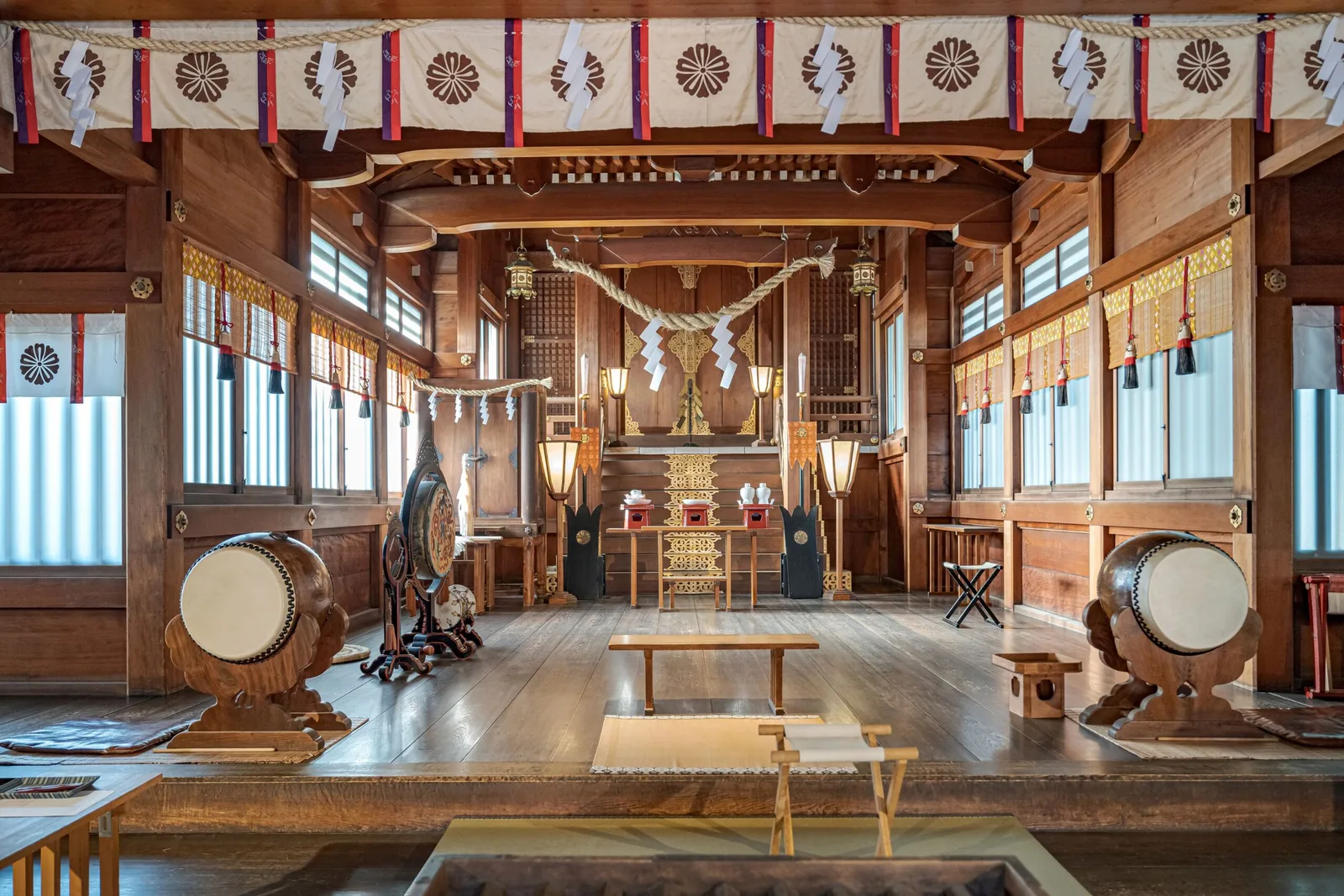
Kyoto guards the cultural heart of Japan. Its historic streets, temples, shrines and traditional districts tell a story that seems to have survived the passing of time without ever really being interrupted. Strolling through the streets of Gion, walking the old lanes that lead to Kiyomizu Temple or following the famous paths of the Fushimi Inari Shrine means entering a dimension in which the past continues to converse with the present. Japanese culture tends to preserve the past through continuity. Many traditions are still part of daily life and not mere historical relics.
When you arrive in Beijing, on the other hand, the story changes scale completely. The Forbidden City, Tiananmen Square, the Summer Palace and the immense avenues of the Chinese capital tell a story built around grandeur, the centrality of power and monumentality. Here the past manifests itself through imposing architecture and spaces that impress by their size and historical significance.
Beauty according to Japan and China
The concept of beauty, too, takes on different forms. One of the most striking aspects of a Japan and China tour is the different aesthetic approach of the two cultures.
In Japan, beauty is often born of simplicity. You sense it in the zen gardens, in the traditional houses, in the bamboo grove of Arashiyama and even in the arrangement of objects within a room. There is a constant search for balance, proportion and the essential. Many of the country’s best-known cultural practices, from the tea ceremony to ikebana, reflect precisely this sensibility, which attaches value not only to what is present but also to the space left empty. A philosophy that continues to influence Japanese architecture, design and daily life to this day.
Chinese culture, while sharing some of the same philosophical roots, often expresses itself through greater visual richness. The great imperial complexes, the decorated temples, the monumental gates and the ancient historic quarters tell of a tradition that has made magnificence and the display of prestige one of its principal languages. Visiting the two countries on the same itinerary allows you to grasp these nuances with extraordinary immediacy.
From the Terracotta Army to the Bamboo Grove
One of the most interesting aspects of a cultural journey through East Asia is the chance to move continually between completely different settings.
In Kyoto you walk through bamboo groves and ancient shrines immersed in nature. In Nara you wander among centuries-old temples and deer that roam freely in the city park.
A few days later, in Xi’an, the traveller stands before one of the most extraordinary archaeological treasures on the planet: the famous Terracotta Army, a UNESCO World Heritage site and symbol of the greatness of Chinese civilisation. Thousands of warriors sculpted more than two thousand years ago continue to guard the mausoleum of the first Qin emperor, offering an impressive testimony to the political and cultural vision of ancient China. Here too the comparison is inevitable. On the one hand, the almost contemplative relationship that Japan establishes with nature and spirituality. On the other, China’s extraordinary ability to tell its own history through monumental works that still leave you speechless today.
Tokyo and Shanghai: two capitals of the future
Many travellers regard Tokyo and Shanghai as the symbol of contemporary Asia. The definition is correct, but incomplete. Both are cities projected towards the future, yet they represent two very different models of modernity.
Tokyo impresses with its almost invisible efficiency. Technology is everywhere, but rarely takes centre stage. It is integrated into daily life, at the service of people, woven into an urban system that works with astonishing precision.
Shanghai, by contrast, communicates its transformation through architecture and its skyline. The Pudong district, with its futuristic skyscrapers, tells of the speed with which China has transformed itself in recent decades and the confidence with which it looks to the future. Strolling along the Bund, observing the contrast between colonial buildings and futuristic towers, you understand perfectly how the city has become one of the symbols of contemporary China. Tokyo and Shanghai represent two different ideas of progress. Both deserve to be understood and, above all, admired at close quarters.
And this is perhaps the true richness of a combined China and Japan trip: coming home with the feeling of having visited two countries, but of having discovered a great deal more.

'%3e%3cg id='Final-Copy-2_2_' transform='translate(1275.000000, 200.000000)'%3e%3cpath class='st0' d='M7.4,12.8h6.8l3.1-11.6H7.4C4.2,1.2,1.6,3.8,1.6,7S4.2,12.8,7.4,12.8z'/%3e%3c/g%3e%3c/g%3e%3c/g%3e%3cg id='final---dec.11-2020'%3e%3cg id='_x30_208-our-toggle' transform='translate(-1275.000000, -200.000000)'%3e%3cg id='Final-Copy-2' transform='translate(1275.000000, 200.000000)'%3e%3cpath class='st1' d='M22.6,0H7.4c-3.9,0-7,3.1-7,7s3.1,7,7,7h15.2c3.9,0,7-3.1,7-7S26.4,0,22.6,0z M1.6,7c0-3.2,2.6-5.8,5.8-5.8 h9.9l-3.1,11.6H7.4C4.2,12.8,1.6,10.2,1.6,7z'/%3e%3cpath id='x' class='st2' d='M24.6,4c0.2,0.2,0.2,0.6,0,0.8l0,0L22.5,7l2.2,2.2c0.2,0.2,0.2,0.6,0,0.8c-0.2,0.2-0.6,0.2-0.8,0 l0,0l-2.2-2.2L19.5,10c-0.2,0.2-0.6,0.2-0.8,0c-0.2-0.2-0.2-0.6,0-0.8l0,0L20.8,7l-2.2-2.2c-0.2-0.2-0.2-0.6,0-0.8 c0.2-0.2,0.6-0.2,0.8,0l0,0l2.2,2.2L23.8,4C24,3.8,24.4,3.8,24.6,4z'/%3e%3cpath id='y' class='st3' d='M12.7,4.1c0.2,0.2,0.3,0.6,0.1,0.8l0,0L8.6,9.8C8.5,9.9,8.4,10,8.3,10c-0.2,0.1-0.5,0.1-0.7-0.1l0,0 L5.4,7.7c-0.2-0.2-0.2-0.6,0-0.8c0.2-0.2,0.6-0.2,0.8,0l0,0L8,8.6l3.8-4.5C12,3.9,12.4,3.9,12.7,4.1z'/%3e%3c/g%3e%3c/g%3e%3c/g%3e%3c/g%3e%3c/svg%3e) Cookie preferences
Cookie preferences