

When we think of Japan, the imagination almost always stops at the Tokyo skyline or the most famous temples of Kyoto. Yet the Japanese archipelago stretches for thousands of kilometres, embracing radically different ecosystems and cultures. There is a sub-arctic Japan of primeval forests and active volcanoes, a subtropical south dominated by primordial hot springs, and cradles of civilisation where history was quite literally born.
Experiencing an itinerary bearing the Guiness Travel name means going beyond the boundaries of the standard tourist routes to embrace the country’s most authentic geographical and cultural soul. Let yourself be guided on an extraordinary journey through the five senses, discovering unexpected places that will redefine your idea of the Land of the Rising Sun.
Hearing: sacred silence and footsteps in the woods of Nara
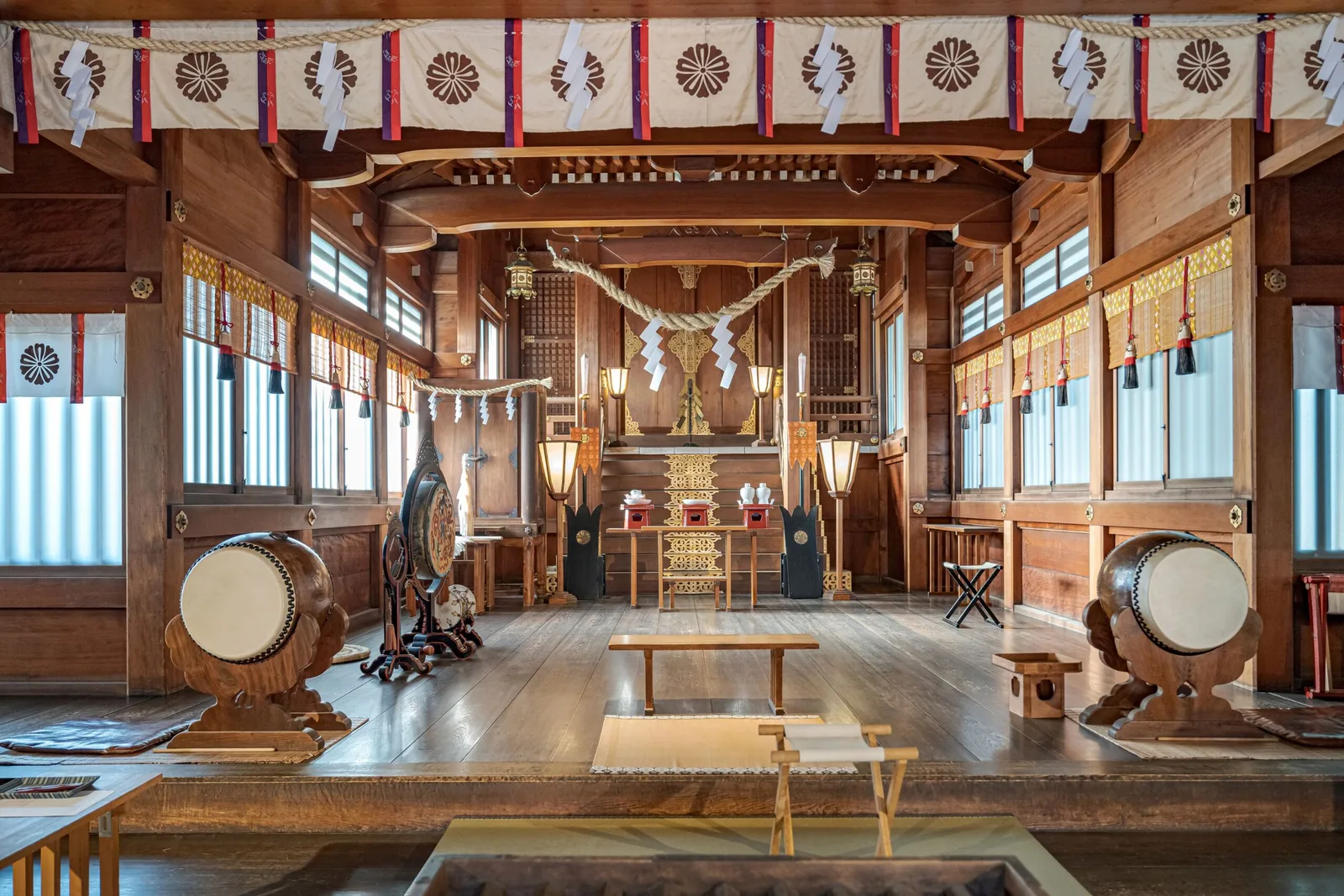
Our journey through hearing begins in Nara, the ancient eighth-century capital that preceded Kyoto. The soundtrack here is not made of trains or voices: it is the deep breathing of Nara Park, where more than a thousand deer – historically regarded as sacred messengers of the Shinto gods – live in complete freedom.
Venturing towards the Kasuga Taisha Shrine, along paths wrapped in primeval woodland and lined with thousands of moss-covered stone lanterns, the ear picks up forgotten sounds. The light tread of hooves on the ground, the muffled bellow of deer in the distance and the rustle of centuries-old leaves. In the solemn silence surrounding Todai-ji, the temple that houses the largest bronze statue of the Buddha in the world, the only noise is the whisper of the wind, an invitation to meditation that has pulsed in this land for more than a thousand years.
Touch: the primordial warmth of the springs of Kyushu
Moving to the far south of the country, to the island of Kyushu, the land reveals its wild, volcanic nature. Here the sense of touch is stirred by an ancestral, regenerating experience: the ritual of the Onsen, bathing in natural hot springs.
In Beppu, or in the splendid setting of Yufuin, the thermal experience becomes physical contact with the planet’s deep energy. Immersing yourself in the piping-hot, mineral-rich waters, enveloped in steam rising towards the open sky while surrounded by volcanic rocks and gardens, is an unforgettable tactile sensation. The skin experiences the purity of the thermal water and the contrast with the cool breeze descending from the surrounding mountains, in a ritual of well-being that for the Japanese unites body and spirit. An experience to be enjoyed on the Authentic Japan tour.
Smell: the scent of wild land in Hokkaido
We fly to the far north, to the wild island of Hokkaido, a land dominated by imposing nature and immense national parks that cover much of its territory. In the Shikotsu-Toya National Park or in the famous “Hell Valley” (Jigokudani) near Noboribetsu, smell becomes the leading sense.
The air is steeped in the pungent scent of sulphur and of the thermal gases escaping directly from fissures in the bare rock. It is the smell of living earth, of geology in action, in sharp contrast with the fresh, balsamic, clean scent of the immense forests of pine and birch that characterise the landscapes of Hokkaido. Walking along the wooden boardwalks suspended above rivers of boiling water steaming amid the luxuriant vegetation is a powerful olfactory experience, one that tells of the untamed strength of a rural, majestic Japan.
Taste: the avant-garde cuisine of the north
Staying in Hokkaido, the sense of taste meets a culinary excellence radically different from that of the rest of the country. This cold northern island is considered the “breadbasket of Japan” and is famous the world over for the extraordinary quality of its raw ingredients, seafood in particular.
Experiencing taste in Hokkaido means sampling the true giant king crab, the freshest sea urchin (uni) or salmon roe glistening like rubies on beds of rice in the historic markets of Sapporo or Hakodate. Moreover, Hokkaido is the only region where the cuisine has fused the culinary tradition of the Japanese settlers with that of the indigenous Ainu people, giving rise to unique dishes such as Genghis Khan (lamb grilled on special domed hotplates) or butter and corn ramen, perfect for warming the palate after a day spent admiring the winter or lakeside landscapes of the north.
Sight: the mirror of water and the smoking volcanoes of Kyushu
The circle of the senses closes as we return to the south, to Kyushu, for a visual experience that takes the breath away: the caldera of Mount Aso. It is one of the largest active volcanoes in the world, a monumental landscape where the eye ranges over an immense crater, at whose centre rises the active cone, constantly emitting spectacular clouds of white smoke against the blue sky.
The emerald green of the endless grasslands covering the ancient caldera clashes visually with the dark tones of the lava rock. Not far away, in Kagoshima, the eye takes in a “Naples of the East”: the city skyline dominated by the majestic profile of the Sakurajima volcano, rising straight out of the sea and mirrored in the waters of the bay. A chromatic and geographical contrast of powerful beauty, a world away from the urban clichés of the guidebooks.
Exploring the far reaches of Japan in complete peace of mind
We have offered you just a few of the trips to Japan that bring together the outlying islands of Hokkaido and Kyushu, passing through unforgettable cities, enchanting landscapes and iconic monuments.
Choosing Guiness Travel means holding the perfect key to these hidden wonders without any logistical worries. The constant presence of the tour leader from Italy relieves you of every organisational stress, allowing you to tune your five senses to the magnificence of the most authentic and profound Japan. The samurai lands of Kyushu and the unspoilt nature of Hokkaido await you: are you ready to look beyond the horizon?

'%3e%3cg id='Final-Copy-2_2_' transform='translate(1275.000000, 200.000000)'%3e%3cpath class='st0' d='M7.4,12.8h6.8l3.1-11.6H7.4C4.2,1.2,1.6,3.8,1.6,7S4.2,12.8,7.4,12.8z'/%3e%3c/g%3e%3c/g%3e%3c/g%3e%3cg id='final---dec.11-2020'%3e%3cg id='_x30_208-our-toggle' transform='translate(-1275.000000, -200.000000)'%3e%3cg id='Final-Copy-2' transform='translate(1275.000000, 200.000000)'%3e%3cpath class='st1' d='M22.6,0H7.4c-3.9,0-7,3.1-7,7s3.1,7,7,7h15.2c3.9,0,7-3.1,7-7S26.4,0,22.6,0z M1.6,7c0-3.2,2.6-5.8,5.8-5.8 h9.9l-3.1,11.6H7.4C4.2,12.8,1.6,10.2,1.6,7z'/%3e%3cpath id='x' class='st2' d='M24.6,4c0.2,0.2,0.2,0.6,0,0.8l0,0L22.5,7l2.2,2.2c0.2,0.2,0.2,0.6,0,0.8c-0.2,0.2-0.6,0.2-0.8,0 l0,0l-2.2-2.2L19.5,10c-0.2,0.2-0.6,0.2-0.8,0c-0.2-0.2-0.2-0.6,0-0.8l0,0L20.8,7l-2.2-2.2c-0.2-0.2-0.2-0.6,0-0.8 c0.2-0.2,0.6-0.2,0.8,0l0,0l2.2,2.2L23.8,4C24,3.8,24.4,3.8,24.6,4z'/%3e%3cpath id='y' class='st3' d='M12.7,4.1c0.2,0.2,0.3,0.6,0.1,0.8l0,0L8.6,9.8C8.5,9.9,8.4,10,8.3,10c-0.2,0.1-0.5,0.1-0.7-0.1l0,0 L5.4,7.7c-0.2-0.2-0.2-0.6,0-0.8c0.2-0.2,0.6-0.2,0.8,0l0,0L8,8.6l3.8-4.5C12,3.9,12.4,3.9,12.7,4.1z'/%3e%3c/g%3e%3c/g%3e%3c/g%3e%3c/g%3e%3c/svg%3e) Cookie preferences
Cookie preferences