

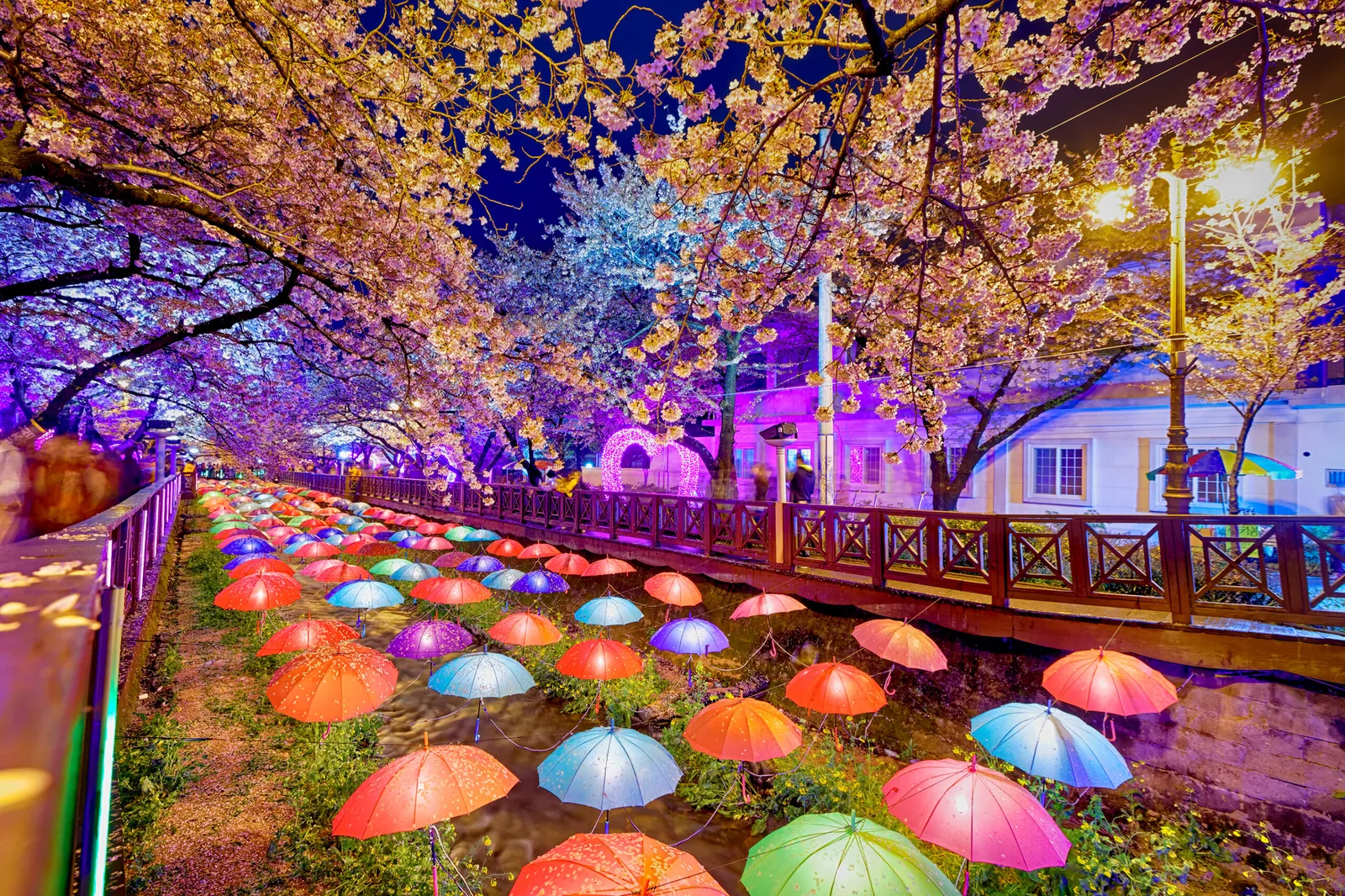
For many European travellers, the first surprise of a trip to South Korea and Japan comes even before visiting a temple, a royal palace or a futuristic metropolis. It comes when you realise how far these two countries have already entered our daily lives. The music we listen to, the series we watch on streaming platforms, the smartphones we use, the video games, the cosmetics, even some of the food trends we now find in our own cities tell a story that often begins in Seoul or Tokyo.
In recent years South Korea has become a global cultural phenomenon. The worldwide success of K-Pop, of groups such as BTS and Blackpink, the explosion of Korean series and Oscar-winning films such as Parasite have turned the spotlight on a country that until a few years ago was still little known to the wider European public. Japan, on the other hand, has been part of our imagination for far longer: entire generations grew up with Nintendo video games, Studio Ghibli films, manga and anime. Yet visiting these places in person means discovering a reality far more complex and interesting than the one that reaches us through our screens.
Seoul: the capital where the past lives alongside Netflix and K-Pop
Those arriving in Seoul for the first time often expect a city dominated exclusively by skyscrapers, technology and modernity. In part that is true. Districts such as Gangnam perfectly represent the most contemporary face of Korea: futuristic shopping centres, technology start-ups, designer cafés and an urban life that moves at an impressive pace.
But you need only cross the historic centre to realise that the Korean capital tells far more than a simple story of economic success.
Gyeongbokgung Palace, built in the 14th century during the Joseon dynasty, remains one of the most important symbols of national identity. The scene that greets visitors every day perfectly captures contemporary Korea: young influencers creating content for Instagram in traditional hanbok, families strolling through the historic courtyards and groups of students alternating photographs for TikTok with lessons on the country’s history.
The same feeling accompanies a visit to the Jongmyo Shrine, one of the most important sites of Korean Confucianism, and reaches its peak during the excursion to the Demilitarised Zone, the famous border separating South Korea from the North. In the space of a few kilometres you pass from one of the most technologically advanced cities on the planet to one of the symbolic sites of contemporary world history. It is a striking contrast, and one that helps make Korea such a special destination.
Gyeongju and Busan: the Korea many don’t expect
If Seoul represents the present and the future, cities such as Gyeongju and Busan allow you to discover lesser-known aspects of the country.
Reaching Gyeongju aboard the KTX, Korea’s high-speed train, means entering a completely different dimension. The ancient capital of the Silla Kingdom for almost a thousand years, the city preserves a historical heritage that has earned it the nickname of “museum without walls”. Yet what strikes you most is not only the UNESCO sites or the historic temples. It is the way these places coexist with everyday life. Royal tombs rise among parks frequented by families and students, while the temples become an integral part of the urban landscape.
Busan, meanwhile, adds another shade to the story. More relaxed than Seoul, more closely tied to the sea and to trade, the country’s second city offers an authentic glimpse of contemporary Korean life. The Jagalchi fish market remains one of the liveliest places on the entire peninsula, while the brightly coloured Gamcheon Culture Village shows how a working-class neighbourhood can become one of the city’s creative symbols. It is no surprise that it has become one of the most photographed places for travellers from all over the world.
Tokyo and Kyoto: Japan beyond the stereotypes
After Korea, the move to Japan lets you grasp immediately the differences between two cultures that are often lumped together superficially.
Tokyo is probably one of the most described and photographed cities on the planet. And yet it still manages to surprise. Not so much for its skyscrapers or the lights of Shibuya as for the naturalness with which it integrates apparently opposite worlds. In a single day you can go from the silence of the Meiji Jingu Shrine to the frenzy of Akihabara, world capital of Japanese pop culture, and then find yourself before the ancient lanterns of the Asakusa Temple.
This dimension emerges even more clearly in Kyoto, the city that guards the historic and spiritual heart of the country. Here the famous Arashiyama Bamboo Grove, the Fushimi Inari Shrine and the Gion district are not simply iconic places to photograph. They are pieces of a culture that continues to influence the daily life of contemporary Japan.
Why choose a combined South Korea and Japan trip
There are many ways of discovering Asia, but few itineraries allow you to understand the present as well as a South Korea and Japan tour. On the one hand there is a nation that over the past twenty years has conquered the world through music, cinema and innovation. On the other there is a country that continues to exert an extraordinary fascination thanks to its ability to combine tradition, technology and pop culture.
Visited together, a trip to South Korea and a trip to Japan offer far more than a simple succession of cities, monuments and landscapes. They let you observe at close quarters two different models of modernity, two societies that have managed to reinvent themselves without losing touch with their roots, and two cultures that continue to influence the world well beyond their borders.
This, probably, is the true value of an escorted tour of Korea and Japan: coming home with the feeling of having visited not just two countries, but two of the most interesting and dynamic realities of the 21st century.

'%3e%3cg id='Final-Copy-2_2_' transform='translate(1275.000000, 200.000000)'%3e%3cpath class='st0' d='M7.4,12.8h6.8l3.1-11.6H7.4C4.2,1.2,1.6,3.8,1.6,7S4.2,12.8,7.4,12.8z'/%3e%3c/g%3e%3c/g%3e%3c/g%3e%3cg id='final---dec.11-2020'%3e%3cg id='_x30_208-our-toggle' transform='translate(-1275.000000, -200.000000)'%3e%3cg id='Final-Copy-2' transform='translate(1275.000000, 200.000000)'%3e%3cpath class='st1' d='M22.6,0H7.4c-3.9,0-7,3.1-7,7s3.1,7,7,7h15.2c3.9,0,7-3.1,7-7S26.4,0,22.6,0z M1.6,7c0-3.2,2.6-5.8,5.8-5.8 h9.9l-3.1,11.6H7.4C4.2,12.8,1.6,10.2,1.6,7z'/%3e%3cpath id='x' class='st2' d='M24.6,4c0.2,0.2,0.2,0.6,0,0.8l0,0L22.5,7l2.2,2.2c0.2,0.2,0.2,0.6,0,0.8c-0.2,0.2-0.6,0.2-0.8,0 l0,0l-2.2-2.2L19.5,10c-0.2,0.2-0.6,0.2-0.8,0c-0.2-0.2-0.2-0.6,0-0.8l0,0L20.8,7l-2.2-2.2c-0.2-0.2-0.2-0.6,0-0.8 c0.2-0.2,0.6-0.2,0.8,0l0,0l2.2,2.2L23.8,4C24,3.8,24.4,3.8,24.6,4z'/%3e%3cpath id='y' class='st3' d='M12.7,4.1c0.2,0.2,0.3,0.6,0.1,0.8l0,0L8.6,9.8C8.5,9.9,8.4,10,8.3,10c-0.2,0.1-0.5,0.1-0.7-0.1l0,0 L5.4,7.7c-0.2-0.2-0.2-0.6,0-0.8c0.2-0.2,0.6-0.2,0.8,0l0,0L8,8.6l3.8-4.5C12,3.9,12.4,3.9,12.7,4.1z'/%3e%3c/g%3e%3c/g%3e%3c/g%3e%3c/g%3e%3c/svg%3e) Cookie preferences
Cookie preferences