

Uncommon beauty, hidden places, unforgettable flavours: this is the Italy that has nothing to envy the rest of the world.
The Bel Paese possesses truly unique treasures, at times undervalued, which deserve to be rediscovered with passion and curiosity by Italians and by visitors from beyond the Alps alike.
This is the case with the most beautiful places in Northern Italy that lie outside the typical tourist routes (which favour the great centres and the sumptuous cities, equally marvellous but by now all too well known).
Indeed, there are many places in Northern Italy that deserve a visit: small medieval strongholds, country villages offering tranquillity, small towns linked to literature or places where time seems to have stood still.
Visiting the small provincial towns can be a worthwhile way to discover new places and, at the same time, to reassess the touristic importance of these spots far from the great flows of visitors.
Padua, the Scrovegni Chapel
A masterpiece of fourteenth-century Italian and European painting, the Scrovegni Chapel is considered the most complete cycle of frescoes painted by the great Tuscan master in his maturity.
Colour and light, poetry and pathos. Man and God. The sense of nature and of history, the sense of humanity and of faith fused together to narrate, in a unique and unrepeatable way, the stories of the Virgin and of Christ.
Right in the centre of Padua, the chapel was completed by Giotto within the first months of 1306, but it is not the city’s only beauty.
Padua is in fact rich in history, art, culture, cheerful squares and unforgettable gastronomic specialities. A city not to be overlooked.
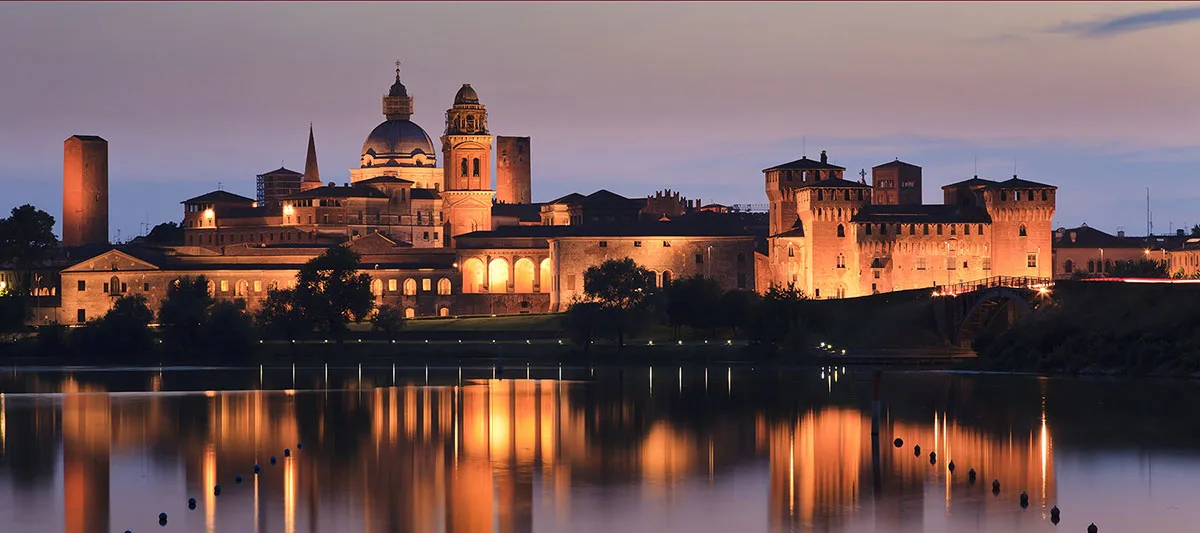
Mantua and Sabbioneta, “UNESCO jewels”
Full of charm, art and history, Mantua and Sabbioneta were added to the UNESCO list in 2008.
The two cities share the legacy left to them by the Gonzaga dynasty, which made them magnificent centres of the Italian and European Renaissance: Mantua embodies the evolving model of the Renaissance city, constantly renewed between the fifteenth and sixteenth centuries with works of hydraulic engineering, town planning and architecture; Sabbioneta, on the other hand, built from scratch, is one of the reference models of the ideal city proposed by Humanism.
Among marvellous palaces, sumptuous churches and castles from another age, Mantua and Sabbioneta seem like towns suspended in time, where history has suddenly met modernity, offering views impossible to forget.
It was precisely for this timeless charm that Mantua was named Italian Capital of Culture 2016.
Vogogna
A splendid vertical landscape of mountains culminating in Monte Rosa (4,637 m) crowns the Val Grande National Park and the Val d’Ossola.
Surrounded by ancient military fortifications, the historic centre of Vogogna is a weave of cobbled lanes, stone houses and atmospheres of another age. We will visit the Gothic Palazzo Pretorio, the remains of the Rocca, dating back to the fifth century, and the Visconti Castle with its round tower steeped in history. Strolling through its streets and entering the beautiful castle will mean taking a plunge a thousand years back in time.
Villa Taranto in Verbania: the most beautiful garden in Italy and the world
The terraced gardens of Villa Taranto, set between Pallanza and Intra, near Lake Maggiore, are certainly one of the places to visit, especially for lovers of botany.
Villa Taranto is a true natural work of art, with thousands of plants and flowers from every part of the world, which in the warmer months offers a truly fairy-tale spectacle.
In 2014 Villa Taranto was named by the website BuzzFeed the most beautiful garden in the world, beating world-famous places such as Versailles, the Mottisfont Abbey Rose Gardens (Hampshire, UK) and the Gardens at the Cloisters (New York).
With the arrival of spring, in fact, these terraced gardens burst into bloom and reopen to the public, to be admired in all their splendour.
The story of these marvellous gardens and their villa is inextricably linked to the figure of Neil Boyd Watson McEacharn, a captain of Scottish origin, lover of botany and of the Bel Paese.
In 1931 Captain McEacharn decided to buy the property from the Marchioness of Sant’Elia to transform it into an English-style garden, in a part of Italy that reminded him of his homeland, Scotland.
McEacharn turned the garden into a true work of art, with thousands of plants and flowers from every corner of the world.
Some specimens are very rare and enrich this “gallery of botanical art” which, every spring and summer, offers a unique and evocative spectacle.
The name “Villa Taranto” was given by the captain himself in honour of one of his ancestors, Étienne Jacques Joseph Alexandre Macdonald, made Duke of Taranto by Napoleon.
Within the gardens stands a villa, built in 1875 to a design by the Ticinese architect Augusto Guidini.
Absolutely not to be missed during a visit to Villa Taranto are: the Avenue of Conifers (an incredible, compact sequence of very rare conifer specimens from all over the world), the Fountain of the Putti (so called for the sculptures that adorn it, surrounded in spring by splendid blooms), the Dahlia Maze (with over 1,700 plants in flower), the Mausoleum (where, at his own wish, the creator of this marvellous garden is buried) and then again the greenhouses and the terraced gardens with their water features.
Northern Italy, between villages and culture
Those just described are only small examples of the beauties that can be rediscovered in our marvellous country.
This is why Guiness Travel, confirmed as the tour operator most attentive to the well-being of places and visitors, has put together an exclusive journey to discover the marvellous lands of Northern Italy: Welcome to the North Prestige.
Trieste, Udine, Palmanova, Padua, Verona, Mantua, Sabbioneta, Gorizia, Parma, and then Milan, Lake Maggiore, Turin, the Langhe, Genoa: a magical coach tour to rediscover the enchanting atmosphere of the Renaissance and the flavours of a land still little known.
Indeed, culture and flavours are the essential combination that makes Italy one of the best-loved countries in the world. This is why our unique and envied culinary specialities, such as Parma and San Daniele ham, Vercelli rice, Parmigiano Reggiano, and the wines of the Langhe and the Collio, fully deserve their place among the beauties of the country.
That is why the tours organised by Guiness always include moments dedicated to gastronomy and to tasting the most exquisite delicacies of these lands.
Why choose this tour?
- to be enchanted and moved by so much beauty in a single journey;
- to visit the UNESCO World Heritage towns of Friuli: Aquileia, Palmanova and Cividale del Friuli;
- to discover the largest maze in the world at Fontanellato;
- to visit the enchanting Borromean Islands;
- to discover Milan’s “Sistine Chapel”;
- to visit the World Heritage cities of Mantua and Sabbioneta;
- to savour culinary delights with typical lunches and tastings;
- to admire the UNESCO World Heritage landscapes of the Langhe.
Discover the Grand Tour Welcome to the North Prestige
Team Guiness

'%3e%3cg id='Final-Copy-2_2_' transform='translate(1275.000000, 200.000000)'%3e%3cpath class='st0' d='M7.4,12.8h6.8l3.1-11.6H7.4C4.2,1.2,1.6,3.8,1.6,7S4.2,12.8,7.4,12.8z'/%3e%3c/g%3e%3c/g%3e%3c/g%3e%3cg id='final---dec.11-2020'%3e%3cg id='_x30_208-our-toggle' transform='translate(-1275.000000, -200.000000)'%3e%3cg id='Final-Copy-2' transform='translate(1275.000000, 200.000000)'%3e%3cpath class='st1' d='M22.6,0H7.4c-3.9,0-7,3.1-7,7s3.1,7,7,7h15.2c3.9,0,7-3.1,7-7S26.4,0,22.6,0z M1.6,7c0-3.2,2.6-5.8,5.8-5.8 h9.9l-3.1,11.6H7.4C4.2,12.8,1.6,10.2,1.6,7z'/%3e%3cpath id='x' class='st2' d='M24.6,4c0.2,0.2,0.2,0.6,0,0.8l0,0L22.5,7l2.2,2.2c0.2,0.2,0.2,0.6,0,0.8c-0.2,0.2-0.6,0.2-0.8,0 l0,0l-2.2-2.2L19.5,10c-0.2,0.2-0.6,0.2-0.8,0c-0.2-0.2-0.2-0.6,0-0.8l0,0L20.8,7l-2.2-2.2c-0.2-0.2-0.2-0.6,0-0.8 c0.2-0.2,0.6-0.2,0.8,0l0,0l2.2,2.2L23.8,4C24,3.8,24.4,3.8,24.6,4z'/%3e%3cpath id='y' class='st3' d='M12.7,4.1c0.2,0.2,0.3,0.6,0.1,0.8l0,0L8.6,9.8C8.5,9.9,8.4,10,8.3,10c-0.2,0.1-0.5,0.1-0.7-0.1l0,0 L5.4,7.7c-0.2-0.2-0.2-0.6,0-0.8c0.2-0.2,0.6-0.2,0.8,0l0,0L8,8.6l3.8-4.5C12,3.9,12.4,3.9,12.7,4.1z'/%3e%3c/g%3e%3c/g%3e%3c/g%3e%3c/g%3e%3c/svg%3e) Cookie preferences
Cookie preferences