

There is a wonderful island in the Indian Ocean, with a charm so intense that over time it has earned names such as the Teardrop of India, the Pearl of the Orient, the Resplendent Isle and many more besides: it is Sri Lanka.
A land of lush forests, wild picture-postcard beaches and unforgettable landscapes, with the green hills of the tea plantations filling the horizon, Sri Lanka is also a destination that makes travellers fall in love with its deep spirituality.
There are a great many temples and shrines dotted across the island, dedicated to Buddha or to the Hindu deities, with precious relics and gigantic statues dominating the temples. But Sri Lanka’s spirituality also has a different, more mysterious face: that of the myths and legends which, centuries after their birth, are still part of the local culture today.
Rama’s Bridge
Legend has it that India and Sri Lanka, today separated by the Palk Strait, were once linked by land by a real bridge. It is mentioned in the Ramayana, the Indian epic poem of over 20,000 verses that tells the life of the divine prince Rama.
According to the Ramayana it was Rama himself who built the bridge, to carry his army from India to Sri Lanka and free his bride Sita, abducted by the demon king Ravana and held prisoner on the island. Rama was helped in its construction by the Vanara, brave and very loyal mythological monkey-men: in five days they built a bridge of rocks 100 leagues long, which allowed the prince to enter Sri Lanka with his troops and bring his wife home.
There is a grain of truth in this legend: some images taken by NASA satellites have revealed a formation of sand, silt and pebbles crossing the Palk Strait and linking India to Sri Lanka. At first it was thought to be a natural phenomenon, but more detailed analysis revealed that it is in fact a man-made structure, more precisely a broken bridge of about 18 miles, formed of boulders placed on the seabed to create a causeway around 1.7 million years ago.
The myth of Sigiriya
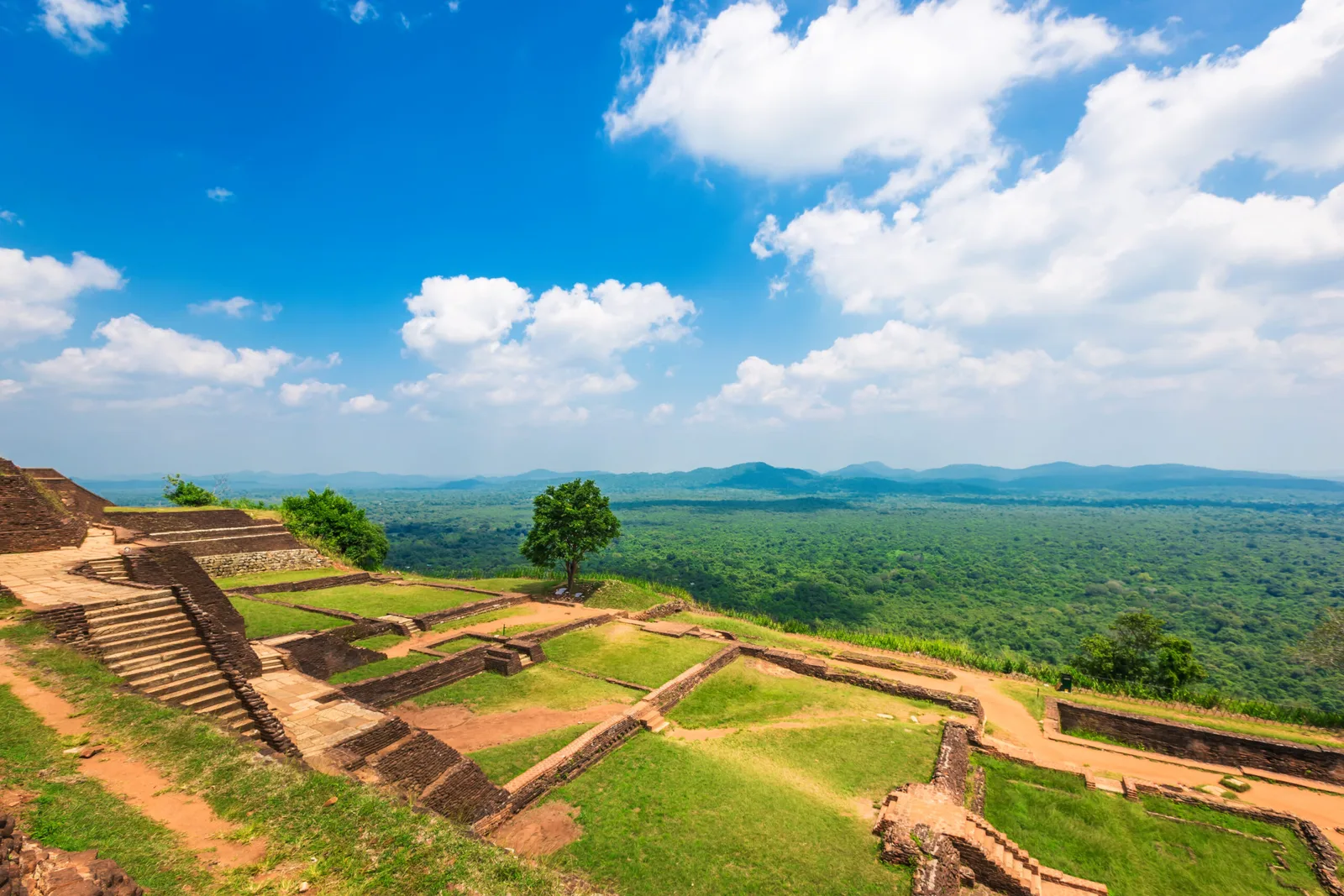
This incredible fortress rising on a rock is one of the best-known and most visited archaeological sites in Sri Lanka, a UNESCO World Heritage site. The ancient castle of King Kashyapa was built in the fifth century on the flat summit of an elliptical volcanic rock about 180 metres high. Since it stands in the middle of a plain, it is visible from kilometres away.
This archaeological marvel, however, is associated with a sad family story of wars and revenge. Kashyapa was in fact the illegitimate son of King Dhatusena, and decided to wall his father up alive to seize the throne, which by right should have gone to his brother Moggallana. The latter fled to India to escape his brother, and Kashyapa had his royal palace built on the rock of Sigiriya so that he could see Moggallana coming when he returned to take his revenge. When Moggallana’s army arrived, Kashyapa’s troops surrendered to the enemy and the usurper king killed himself with his own sword.
Moggallana later decided to turn Sigiriya into a monastery, re-establishing the capital of his kingdom at Anuradhapura.
Demons and ritual dances
As in many other traditions, Sri Lanka too has legends linked to the struggle between good and evil. In particular, the island’s culture includes two kinds of demons, the yakseya and the yakka, ruled by the demon king Wesamuni, capable of beheading even thousands of his followers with one stroke of his magic sword if they disobey his rules.
Among the demons of Sri Lankan folklore are the vampire Riri Yaka, with four arms and the face of a monkey; the black prince Kalu Kumaraya, who attacks lone women to kill them; the giant Maha Sona, who haunts cemeteries; the devil bird whose blood-curdling cry foretells misfortune; and many others.
In the tradition of the peoples who still inhabit the rural areas of the island there is a belief that it is the demons who bring illness and misfortune upon people, so to defeat and overcome them people turn to exorcism rituals. These are dances performed by men dressed in local costumes, lit by torches and accompanied by drums and chants. The purpose of the dance is to lure the demon so that the exorcist can then drive it away.
These ancient rituals, so far from our own imagination, add to the magical, wild charm of this island just waiting to be discovered.
Choose the Guiness Travel Tours
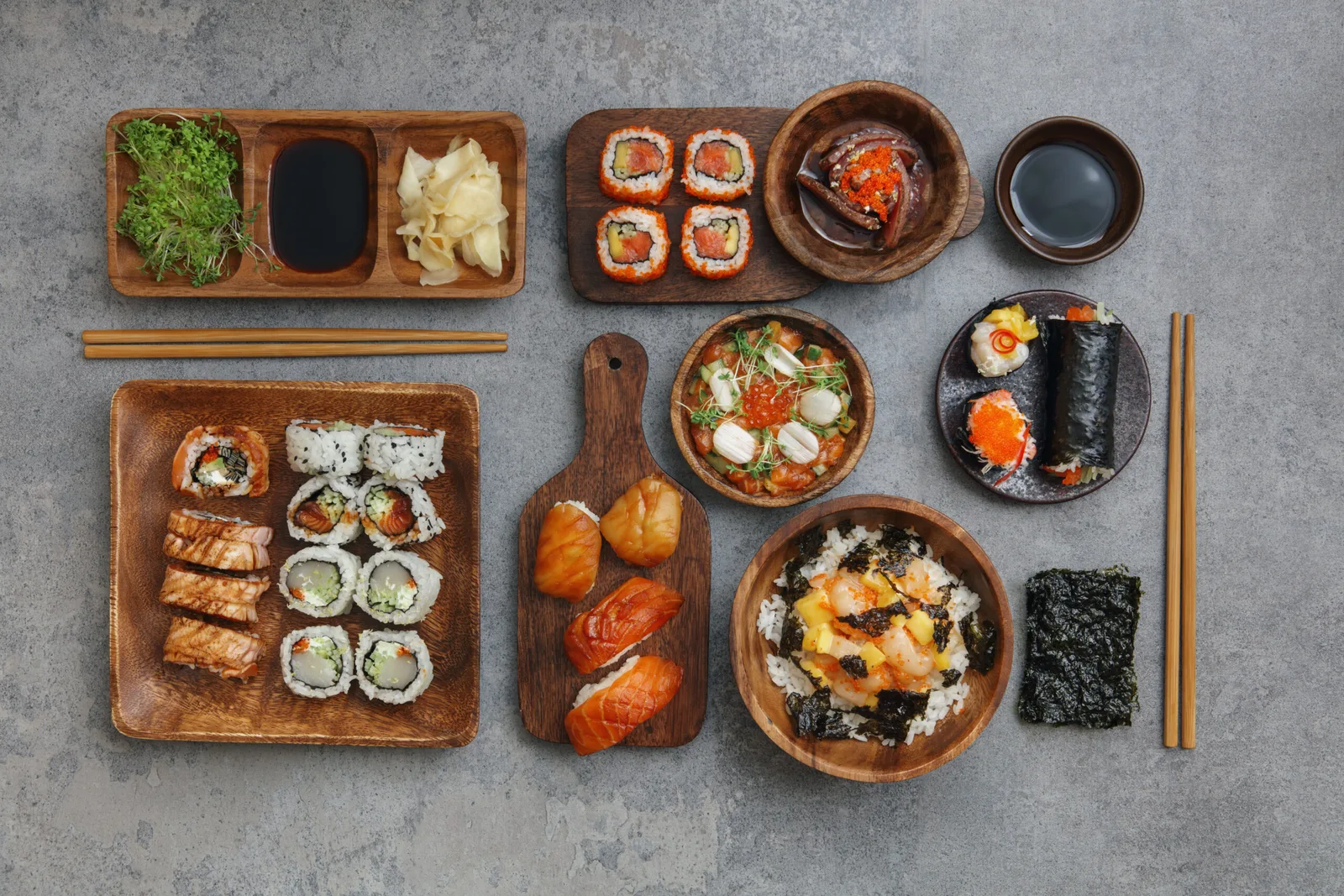
For Guiness, travelling is an enriching experience to be savoured in every way, in which every detail is taken care of, including the places where you can discover the local cuisine.
Every itinerary in the catalogue is 100% independently planned and
is carefully designed and tested, allowing the product to evolve constantly and reach a high, wide-ranging cultural level.
This is why we created the Guiness Exclusive Tour, a unique travel experience, mindful of sustainability, which offers you considerable advantages:
- organisation
- attention to detail
- a search for excellent services on the ground (designed to give you maximum comfort, leaving you free to think of nothing but enjoying the moment).
DISCOVER THE GUINESS TRAVEL TOUR
Team Guiness

'%3e%3cg id='Final-Copy-2_2_' transform='translate(1275.000000, 200.000000)'%3e%3cpath class='st0' d='M7.4,12.8h6.8l3.1-11.6H7.4C4.2,1.2,1.6,3.8,1.6,7S4.2,12.8,7.4,12.8z'/%3e%3c/g%3e%3c/g%3e%3c/g%3e%3cg id='final---dec.11-2020'%3e%3cg id='_x30_208-our-toggle' transform='translate(-1275.000000, -200.000000)'%3e%3cg id='Final-Copy-2' transform='translate(1275.000000, 200.000000)'%3e%3cpath class='st1' d='M22.6,0H7.4c-3.9,0-7,3.1-7,7s3.1,7,7,7h15.2c3.9,0,7-3.1,7-7S26.4,0,22.6,0z M1.6,7c0-3.2,2.6-5.8,5.8-5.8 h9.9l-3.1,11.6H7.4C4.2,12.8,1.6,10.2,1.6,7z'/%3e%3cpath id='x' class='st2' d='M24.6,4c0.2,0.2,0.2,0.6,0,0.8l0,0L22.5,7l2.2,2.2c0.2,0.2,0.2,0.6,0,0.8c-0.2,0.2-0.6,0.2-0.8,0 l0,0l-2.2-2.2L19.5,10c-0.2,0.2-0.6,0.2-0.8,0c-0.2-0.2-0.2-0.6,0-0.8l0,0L20.8,7l-2.2-2.2c-0.2-0.2-0.2-0.6,0-0.8 c0.2-0.2,0.6-0.2,0.8,0l0,0l2.2,2.2L23.8,4C24,3.8,24.4,3.8,24.6,4z'/%3e%3cpath id='y' class='st3' d='M12.7,4.1c0.2,0.2,0.3,0.6,0.1,0.8l0,0L8.6,9.8C8.5,9.9,8.4,10,8.3,10c-0.2,0.1-0.5,0.1-0.7-0.1l0,0 L5.4,7.7c-0.2-0.2-0.2-0.6,0-0.8c0.2-0.2,0.6-0.2,0.8,0l0,0L8,8.6l3.8-4.5C12,3.9,12.4,3.9,12.7,4.1z'/%3e%3c/g%3e%3c/g%3e%3c/g%3e%3c/g%3e%3c/svg%3e) Cookie preferences
Cookie preferences