

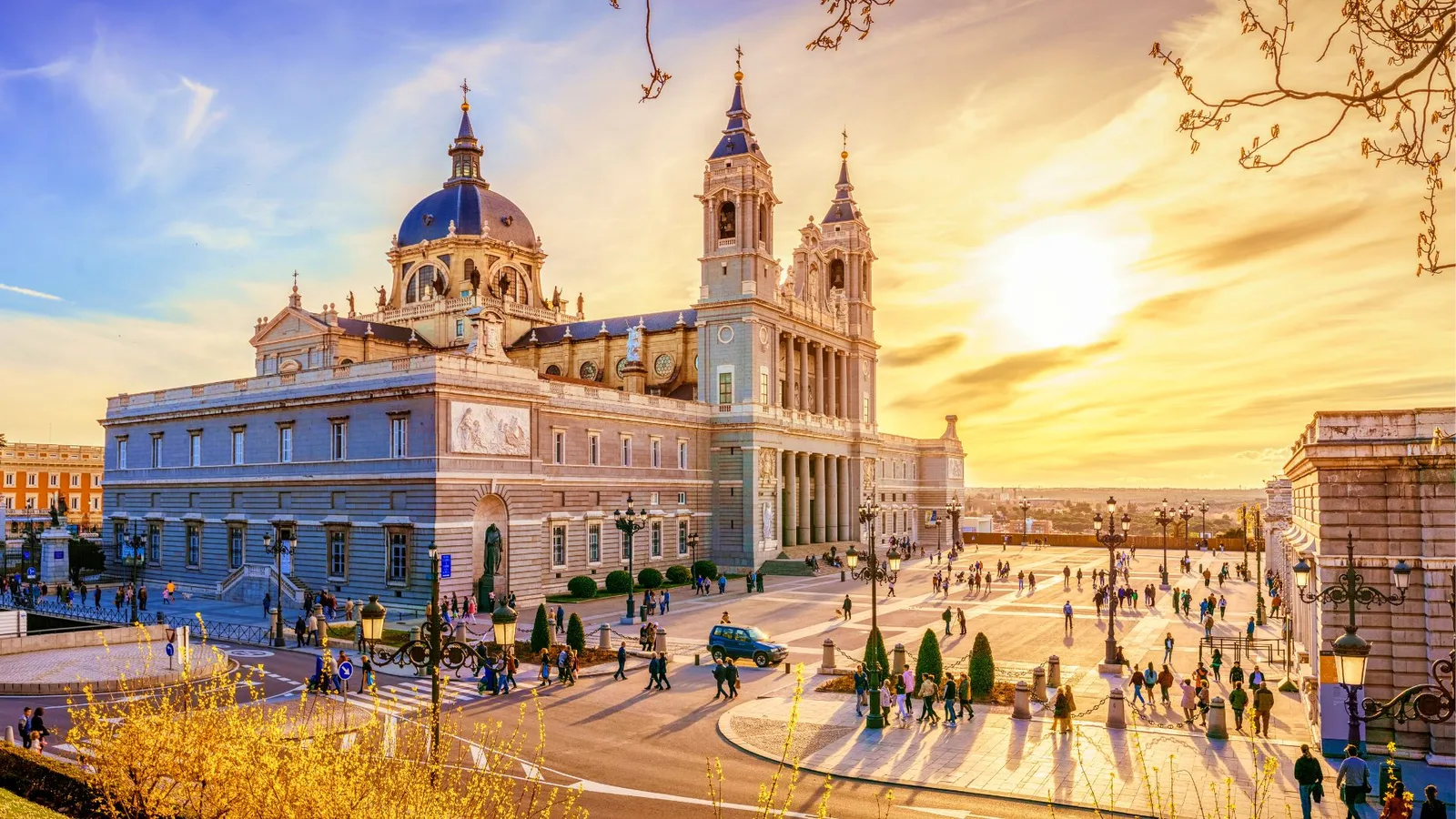
That Madrid has become one of the trendiest cities around is by now well known.
The Spanish capital boasts numerous cultural attractions, blended to perfection with a pleasure-loving lifestyle, an inexhaustible nightlife and a food and wine scene that has little to envy in other destinations!
With the hard times of the Franco dictatorship decades behind it, Madrid looks to the present and the future with a tremendous charge of energy, assuring anyone who visits a travel experience that is rewarding to say the least.
What perhaps not everyone knows is that this city offers a cultural scene that is truly without equal, counting among its assets some of the most fascinating museums in the world.
Let us discover them together in this new article!
The Prado
A veritable treasure house of art
Voted the most beautiful museum in the world a few years ago, the Prado really has everything it takes to astonish. Madrid’s best-known museum, situated between the Fountain of Neptune and the Retiro Park, first saw the light in 1819, at the instigation of Charles III of Spain.
Built by the court architect Juan de Villanueva, the Prado was originally intended to house a cabinet of natural sciences, as part of a scheme of redevelopment and urban renewal known as the Salón del Prado. Initially made up of just 3 rooms and 311 paintings, the museum expanded over time until it reached the great dimensions that characterise it today.
Today, the gallery holds more than 8,000 paintings and 310 sculptures, making it the most complete collection of Spanish painting in the world. Three artistic currents take centre stage in a visit to the museum: the Flemish school, the Italian school and the Spanish school.
The Flemish collection is one of the most important of its kind and bears witness to the close bond between the Spanish monarchy and the territories of Flanders. In the rooms devoted to the Flemish masters you can admire canvases by Bosch, Van der Weyden and Jordaens; the high points, however, are the works of the Brueghel family and, above all, those of Rubens, one of the best-known painters of all time.
The Italian school is also very well represented, from medieval art through to the whole of the Renaissance. Its holdings include paintings by Fra Angelico, Mantegna, Botticelli and Antonello da Messina. Nor are the great names of the Venetian school missing: Tintoretto, Titian and Veronese. Finally, you can also admire the intensely chiaroscuro works of a true giant of art, Michelangelo Merisi, known as Caravaggio.
But it is perhaps the Spanish painting of the so-called Golden Age, the 1600s, that captures visitors’ attention most strongly. Here shines what is perhaps the most famous painting in the entire collection, Velázquez’s Las Meninas, which sums up the painter’s ideal world and expresses a perfect metaphor of life and art. Besides this great artist, Murillo, El Greco and Zurbarán deserve mention, and their role is anything but a supporting one. In short, you cannot visit Madrid without yielding to the irresistible temptation of visiting its most important museum!
Travel inspiration:
Click here for the SPAIN itineraries
Reina Sofía Museum
A beautiful laboratory of contemporary art
While the Prado offers a broad retrospective of medieval and modern art, the Reina Sofía is a privileged vantage point for observing the artistic output of the twentieth century. The museum was inaugurated in 1992 by the Spanish royal family and is housed in the former General Hospital of Madrid, an eighteenth-century building commissioned by Charles III of Spain.
In 2021 the permanent exhibition was rehung: no fewer than 2,000 works shedding light on the museum’s relationship with twentieth-century art. From the avant-gardes to the concerns of the new millennium, visitors can travel through the great movements of the last century: Surrealism, Futurism, Abstract art, Expressionism and so on.
Spanish artists are the protagonists of the Reina Sofía: above all Dalí, Gris and Miró. But the museum’s strongest draw comes without any doubt from Guernica, the masterpiece by Pablo Picasso, perhaps the most important artist of the twentieth century. This canvas of enormous dimensions is alone worth the price of admission. It was painted by Picasso as an act of accusation and an expression of grief following the bombing of the town of Guernica during the Spanish Civil War.
The tension and anguish one perceives in the juxtaposition of ungainly forms and colours ranging across black and white are a warning that no one should forget the violence and cruelty of every conflict, expressed through a powerful symbolism that brings animals and people together.
With the works of Dalí, on the other hand, what leaps to the eye is the complex personality of the artist, always ready for the pleasure of provocation and symbolic eclecticism. The Reina Sofía Museum has two annexes, home to further permanent and temporary exhibitions, located inside Madrid’s beautiful Retiro park.
Travel inspiration:
Click here for the SPAIN itineraries
Thyssen-Bornemisza Museum
The museum you don’t expect
Still within the Paseo del Arte, which brings together the three main museums and became a UNESCO World Heritage site just a few years ago, stands the Thyssen Museum. Less well known than the other two, this museum is in fact a real treasure chest of art and can hold unexpected surprises.
The Thyssen collection is made up of more than a thousand works that the Spanish government took care to purchase directly from the family of the same name in the summer of 1993. The exhibition space, spread over 3 floors, allows visitors to follow the evolution of artistic movements from the 17th to the 20th century.
The building that houses the canvases is the handsome Villahermosa Palace, a much-admired example of Madrid neoclassical architecture dating from the late 1700s.
The sections are rich in artistic treasures. Particularly evocative is the part devoted to the Italian primitives and the painters of the 1300s, such as Duccio di Buoninsegna. The early Flemish school is also very well represented, through the Annunciation Diptych by Van Eyck, one of the most celebrated of artists. Not to be missed either is a section of fifteenth-century Italian portraiture, with examples by Ghirlandaio and Carpaccio.
After a retrospective of landscape painting, the surprises continue with the Impressionists, with canvases by Monet and Degas to admire. The Post-Impressionists feature too, with paintings by Cézanne and Van Gogh.
The protagonists of twentieth-century art, meanwhile, are exponents of the avant-gardes, such as the Surrealists and the Russian Abstract painters. To name only a few of the most famous, you can admire pictures by Kandinsky, Chagall, Dalí, Hopper and Lichtenstein. In short, even if the Thyssen does not offer the same wealth as the better-known Prado, it is nonetheless another unmissable stop for all art lovers.
Travel inspiration:
Click here for the SPAIN itineraries
Toledo
The wonderful old town that El Greco called home
About an hour from the capital rises Toledo, a wonderful town with an illustrious history that has seen Romans, Christians, Arabs and Jews succeed one another. In homage to the tolerance of its people, Toledo has quite rightly been called the city of the “three cultures”.
Besides its beautiful squares, medieval lanes and historic buildings, there is another reason why Toledo is so famous and absolutely deserves a visit: El Greco. This celebrated painter, born in Crete and trained on the Greek island, decided to put down roots in Toledo precisely because of the great cultural ferment to be found there.
Here he left superb testimonies of his art, further enriching a city already full of charm. The place to start when admiring his masterpieces is the cathedral, where three original works can still be seen: Saint John the Baptist, Saint John the Evangelist and the Resurrection of Christ.
Toledo is also home to the artist’s house-museum, in the Jewish quarter, the Judería. Renovated and decorated with furnishings from El Greco’s era, the museum brings together a collection of his works, including the Apostles series, the portraits of Diego and Antonio de Covarrubias y Leiva, the Redeemer and the View of Toledo. Toledo is, in short, a veritable paradise for all lovers of history and art.
Travel inspiration:
Click here for the SPAIN itineraries
Why choose a Guiness Travel Tour
For us at Guiness, a journey is a wonderful frame of life.
Our aim is not to “show” places, but to accompany travellers as they immerse themselves fully in the culture and beauty of their chosen destination.
All our itineraries are 100% independently planned, carefully designed and tested for over 30 years, thus allowing the product to evolve constantly, reaching a high, wide-ranging cultural level and guaranteeing maximum comfort in the services on the ground.
This is why we created the Guiness Exclusive Tour:
a unique travel experience, mindful of sustainability and rich in experiences, designed to give you maximum comfort, leaving you free to think of nothing but enjoying the moment.
Every one of our trips comes with guaranteed extras:
- Tour leader departing from Italy and accompanying the group for the whole duration of the tour
- Exclusive departures with a limited number of places
- Departures possible from all over Italy
- 24-hour assistance on every departure
- Cancellation without penalty up to 45 actual days before departure
- No surprise extra costs on arrival
- Free minibar service on board the coaches (guaranteed in all the countries visited)
Click here and discover all the exclusive Guiness Travel itineraries
Team
Guiness Travel T.O.




'%3e%3cg id='Final-Copy-2_2_' transform='translate(1275.000000, 200.000000)'%3e%3cpath class='st0' d='M7.4,12.8h6.8l3.1-11.6H7.4C4.2,1.2,1.6,3.8,1.6,7S4.2,12.8,7.4,12.8z'/%3e%3c/g%3e%3c/g%3e%3c/g%3e%3cg id='final---dec.11-2020'%3e%3cg id='_x30_208-our-toggle' transform='translate(-1275.000000, -200.000000)'%3e%3cg id='Final-Copy-2' transform='translate(1275.000000, 200.000000)'%3e%3cpath class='st1' d='M22.6,0H7.4c-3.9,0-7,3.1-7,7s3.1,7,7,7h15.2c3.9,0,7-3.1,7-7S26.4,0,22.6,0z M1.6,7c0-3.2,2.6-5.8,5.8-5.8 h9.9l-3.1,11.6H7.4C4.2,12.8,1.6,10.2,1.6,7z'/%3e%3cpath id='x' class='st2' d='M24.6,4c0.2,0.2,0.2,0.6,0,0.8l0,0L22.5,7l2.2,2.2c0.2,0.2,0.2,0.6,0,0.8c-0.2,0.2-0.6,0.2-0.8,0 l0,0l-2.2-2.2L19.5,10c-0.2,0.2-0.6,0.2-0.8,0c-0.2-0.2-0.2-0.6,0-0.8l0,0L20.8,7l-2.2-2.2c-0.2-0.2-0.2-0.6,0-0.8 c0.2-0.2,0.6-0.2,0.8,0l0,0l2.2,2.2L23.8,4C24,3.8,24.4,3.8,24.6,4z'/%3e%3cpath id='y' class='st3' d='M12.7,4.1c0.2,0.2,0.3,0.6,0.1,0.8l0,0L8.6,9.8C8.5,9.9,8.4,10,8.3,10c-0.2,0.1-0.5,0.1-0.7-0.1l0,0 L5.4,7.7c-0.2-0.2-0.2-0.6,0-0.8c0.2-0.2,0.6-0.2,0.8,0l0,0L8,8.6l3.8-4.5C12,3.9,12.4,3.9,12.7,4.1z'/%3e%3c/g%3e%3c/g%3e%3c/g%3e%3c/g%3e%3c/svg%3e) Cookie preferences
Cookie preferences