

The soul of Japan: a journey into the most authentic traditions of the Land of the Rising Sun
Japanese traditions are not simply customs handed down over time. They are a true expression of the Japanese philosophy of life, founded on respect, harmony, balance and the search for beauty in small everyday gestures. Travelling in Japan also means coming into contact with this unique sensibility. Let us discover some of the most intense and immersive experiences to be enjoyed in the Land of the Rising Sun.
Take part in the tea ceremony and truly slow the pace
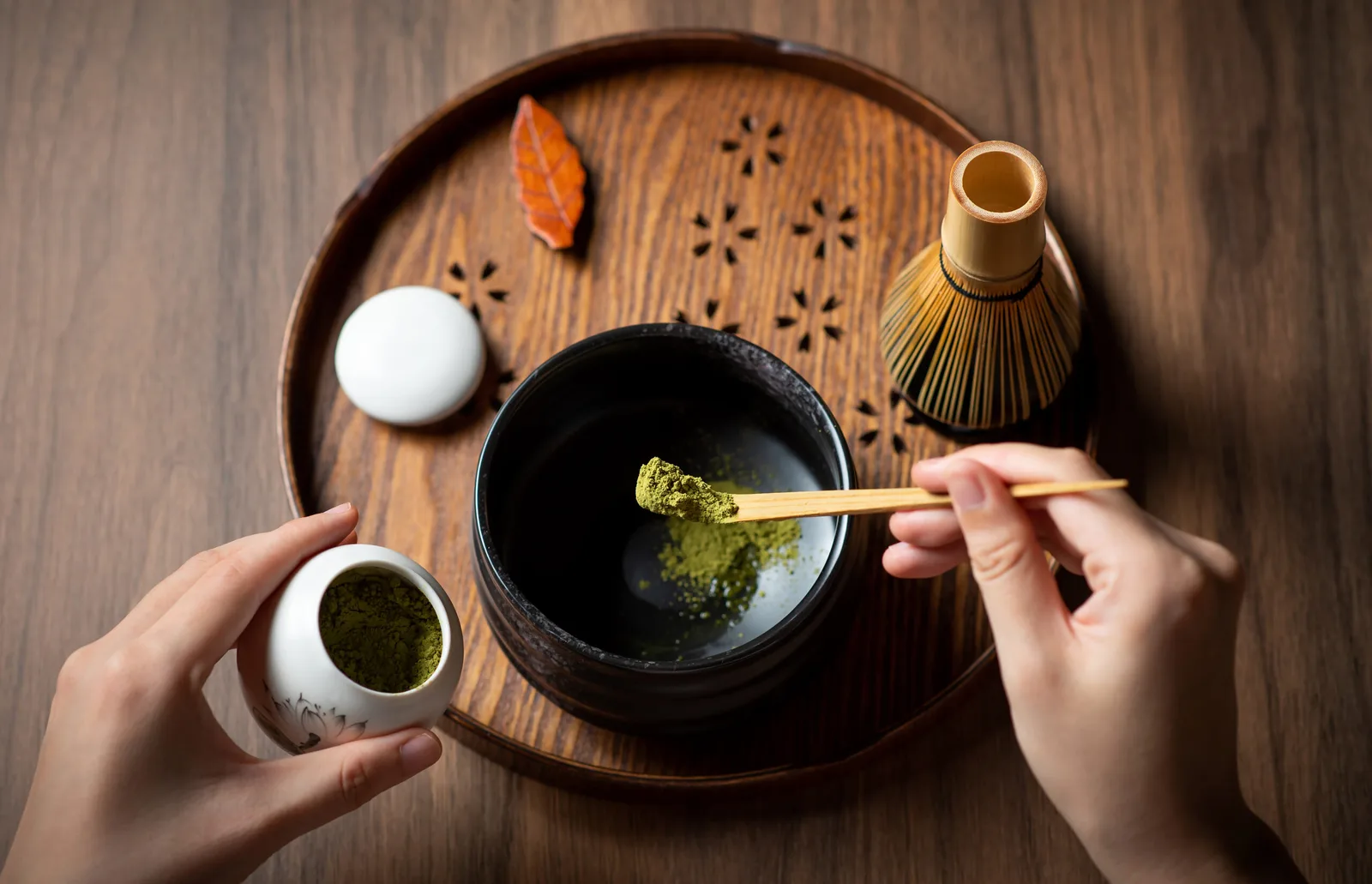
Among the most fascinating cultural experiences to be had in Japan is undoubtedly the tea ceremony, known as chanoyu. Far more than a simple tasting, it is a genuine meditative ritual born of Zen philosophy. Every movement is performed with extreme precision: the way the tea is prepared, served and received follows ancient rules that speak of harmony, respect and mindfulness.
For first-time visitors to Japan, taking part in a traditional ceremony is often a surprising moment. In a country that moves at breakneck speed, the tea ritual suddenly invites you to slow down. You step barefoot into a small chashitsu, the traditional tea room, listen to the sound of water slowly coming to the boil and watch the unhurried gestures of the tea master. Everything seems designed to create a moment of perfect balance.
Even the celebrated matcha, Japanese green tea, takes on a different meaning here: it is not merely a drink but part of a spiritual and aesthetic experience. In cities such as Kyoto or Uji, considered the home of the finest Japanese matcha, you can enjoy authentic experiences inside ancient tea houses still frequented by the Japanese today.
Discover the hidden meaning of ikebana, bonsai and origami
Japan has turned even the simplest gestures into true art forms. Ikebana, the ancient art of flower arrangement, was not born to create mere decorations. Every flower, branch or leaf is arranged according to a precise balance between space, emptiness, form and nature.
Unlike Western arrangements, often lavish and abundant, ikebana seeks the essential. A few carefully chosen elements manage to convey harmony and meaning. It is a philosophy that perfectly reflects the Japanese concept of wabi-sabi, the beauty of imperfection and of simple things.
The same principle is found in the art of bonsai, perhaps one of the best-known Japanese traditions in the world. Behind these tiny miniature trees lie years of patience, care and dedication. Every bonsai tells a story of balance and time. Some specimens are handed down from generation to generation and can be tens, sometimes hundreds, of years old.
Origami, too, the art of folding paper, goes well beyond a simple creative pastime. In Japan the paper crane, for instance, is a symbol of peace, good fortune and longevity. A well-known legend has it that whoever manages to fold a thousand cranes may make a wish. A tradition that became even more famous after the story of Sadako Sasaki, a young girl who survived the atomic bomb at Hiroshima and began making paper cranes as a symbol of hope.
These are small cultural details that reveal how Japan manages to find poetry and meaning even in the simplest things.
Meet the geisha of Kyoto among lanterns and tea houses
Among the most iconic images on an escorted tour of Japan are undoubtedly the geisha. In the historic Gion district of Kyoto it is still possible to glimpse geiko and maiko – geisha and apprentices – as they hurry through the lantern-lit alleys to reach the traditional tea houses.
Contrary to many Western stereotypes, geisha are not figures tied to worldly entertainment but highly specialised artists who devote years to the study of dance, music, song, conversation and etiquette. Becoming a geisha requires discipline and rigorous training. Young maiko begin their path as early as adolescence and spend years learning every detail of the tradition.
Experience an onsen and understand the true meaning of Japanese relaxation
Among the experiences most beloved by the Japanese are the onsen, traditional natural hot springs fed by volcanic sources. For many Western travellers the first experience of an onsen may seem unusual, above all because of the very strict rules surrounding the bathing ritual. But once the initial embarrassment is overcome, you discover one of the most authentic aspects of Japanese culture.
Onsen are not simply places to wash or unwind. They are spaces devoted to mental well-being, calm and connection with nature. Many traditional ryokan, especially in mountain areas or near Mount Fuji, offer open-air thermal baths surrounded by forests, mountains or spectacular views.
Stepping into an onsen after a day of travel becomes an almost restorative ritual. Silence, hot water and nature turn a simple gesture into a profoundly relaxing moment.
Watch the martial arts and understand Japanese discipline
Japanese martial arts say a great deal about the country’s mentality and philosophy. Disciplines such as judo, kendo, karate or aikido are not regarded merely as combat sports but as paths of personal growth founded on respect, self-control and discipline.
In Japan the relationship between master and pupil still holds very deep value today. During training sessions and demonstrations what strikes you most is the silence, the concentration and the rigorous respect for the rules. Even those who do not practise martial arts immediately sense how deeply these values are rooted in everyday Japanese culture: from good manners on public transport to almost obsessive punctuality and the collective sense of respect for others.
Sleep in a ryokan and wear a yukata: Japan at its most authentic
One of the best ways to truly connect with Japanese culture is to stay in a ryokan, the traditional Japanese inn. You sleep on futons laid out on tatami mats, wear a yukata, dine seated on the floor and live in an atmosphere of silence, order and small daily rituals. Many travellers describe their stay in a ryokan as one of the most memorable moments of the journey, because it allows them to experience Japan far more intimately than in Western-style hotels.
The traditional cuisine served in ryokan – often in kaiseki style – is likewise a cultural as well as a gastronomic experience. Every dish is presented with almost artistic care, in full respect of seasonality and Japanese aesthetics.
The true charm of Japan lies in the small details
What makes Japan truly special is not only its great temples or futuristic cities. It is the small everyday details.
The orderly silence in crowded underground trains. The perfect queues on the pavements. The shops open twenty-four hours a day where everything works flawlessly. The vending machines on every corner. The almost disarming kindness of the people.
In Japan even the simplest gestures seem to carry a precise meaning. And it is precisely this almost poetic attention to detail that so often wins over those visiting the country for the first time.
Discover Japan through authentic experiences with Guiness Travel
With Guiness Travel, a journey to Japan is not limited to visiting the most famous sights but becomes an authentic immersion in local culture. Tea ceremonies, stays in traditional ryokan, Japanese cookery classes, kimono dressing, historic quarters, Zen temples and cultural activities allow you to experience the country in a far deeper and more engaging way.
Thanks to the assistance of expert tour leaders and local guides, every experience is lived with greater awareness, truly understanding the meaning of Japanese traditions and rituals.
Because Japan is not merely a destination to be seen. It is a country to be listened to, observed and experienced slowly.




'%3e%3cg id='Final-Copy-2_2_' transform='translate(1275.000000, 200.000000)'%3e%3cpath class='st0' d='M7.4,12.8h6.8l3.1-11.6H7.4C4.2,1.2,1.6,3.8,1.6,7S4.2,12.8,7.4,12.8z'/%3e%3c/g%3e%3c/g%3e%3c/g%3e%3cg id='final---dec.11-2020'%3e%3cg id='_x30_208-our-toggle' transform='translate(-1275.000000, -200.000000)'%3e%3cg id='Final-Copy-2' transform='translate(1275.000000, 200.000000)'%3e%3cpath class='st1' d='M22.6,0H7.4c-3.9,0-7,3.1-7,7s3.1,7,7,7h15.2c3.9,0,7-3.1,7-7S26.4,0,22.6,0z M1.6,7c0-3.2,2.6-5.8,5.8-5.8 h9.9l-3.1,11.6H7.4C4.2,12.8,1.6,10.2,1.6,7z'/%3e%3cpath id='x' class='st2' d='M24.6,4c0.2,0.2,0.2,0.6,0,0.8l0,0L22.5,7l2.2,2.2c0.2,0.2,0.2,0.6,0,0.8c-0.2,0.2-0.6,0.2-0.8,0 l0,0l-2.2-2.2L19.5,10c-0.2,0.2-0.6,0.2-0.8,0c-0.2-0.2-0.2-0.6,0-0.8l0,0L20.8,7l-2.2-2.2c-0.2-0.2-0.2-0.6,0-0.8 c0.2-0.2,0.6-0.2,0.8,0l0,0l2.2,2.2L23.8,4C24,3.8,24.4,3.8,24.6,4z'/%3e%3cpath id='y' class='st3' d='M12.7,4.1c0.2,0.2,0.3,0.6,0.1,0.8l0,0L8.6,9.8C8.5,9.9,8.4,10,8.3,10c-0.2,0.1-0.5,0.1-0.7-0.1l0,0 L5.4,7.7c-0.2-0.2-0.2-0.6,0-0.8c0.2-0.2,0.6-0.2,0.8,0l0,0L8,8.6l3.8-4.5C12,3.9,12.4,3.9,12.7,4.1z'/%3e%3c/g%3e%3c/g%3e%3c/g%3e%3c/g%3e%3c/svg%3e) Cookie preferences
Cookie preferences