

China: the journey beyond imagination, through cult films, suspended peaks and the future
Some journeys manage to redraw our mental map completely, overturning even the most deeply rooted clichés. The itinerary designed by Guiness Travel springs from exactly this awareness. It is not a simple succession of stops, but a genuine thread linking the majesty of imperial history to natural scenery so surreal that it has crossed the boundaries of reality to become cinema. It is a route conceived for those who want to go beyond the already seen, walking among the red lanterns of ancient dynasties, floating among the suspended mountains that inspired modern science fiction, and sailing the canals of a Venice of the East, before touching the vertical lights of tomorrow.
Beijing: secrets written in stone and imperial messages
Our Grand Tour of China Prestige begins in Beijing, capital of the Celestial Empire, a metropolis where history is not confined to museums but pulses in the very architecture. To meet the Great Wall we have chosen the legendary Mutianyu section, a defensive masterpiece set in lush nature. Unlike other sections, here the adventure begins suspended in mid-air, thanks to a panoramic cable car offering an overview of China’s stone backbone. Walking along its ramparts helps you understand how this enormous work is in fact a mosaic of different eras, with each dynasty adding its own piece, adapting to the rock and the terrain.
Not far away, in the geometric heart of the city, the Forbidden City guards a vision of the world radically different from our own. This immense complex was built not only to house the court, but to convey a precise message of power and cosmic harmony. Exploring its seventy-two hectares of buildings, the mind turns to the famous legend of the nine thousand rooms. In local culture, nine is the number associated with the emperor, while ten thousand represents the absolute perfection of Heaven. Since no earthly sovereign could ever dare to equal the divine, the palace symbolically stopped one step short of celestial perfection. Strolling through its courtyards, the attentive eye will also notice the almost total absence of trees in the main squares: an architectural device conceived not for aesthetics, but for the emperor’s safety, making any ambush or hiding place impossible during official ceremonies.
Imperial Beijing, however, also knows how to become an up-close sensory experience. After admiring the spiritual solemnity of the Lama Temple and the magnificence of the Summer Palace, the day ends at the table, where the famous Peking duck is served according to an age-old ritual of carving and preparation. Straight afterwards, Beijing by night reveals all its vibrancy on Qianmen Street, in the historic Dazhalan district, and among the pungent aromas of the Wangfujing Night Market, where modernity embraces the ancient charm of the hutong.
Time suspended in Pingyao and the breath of history in Xi’an
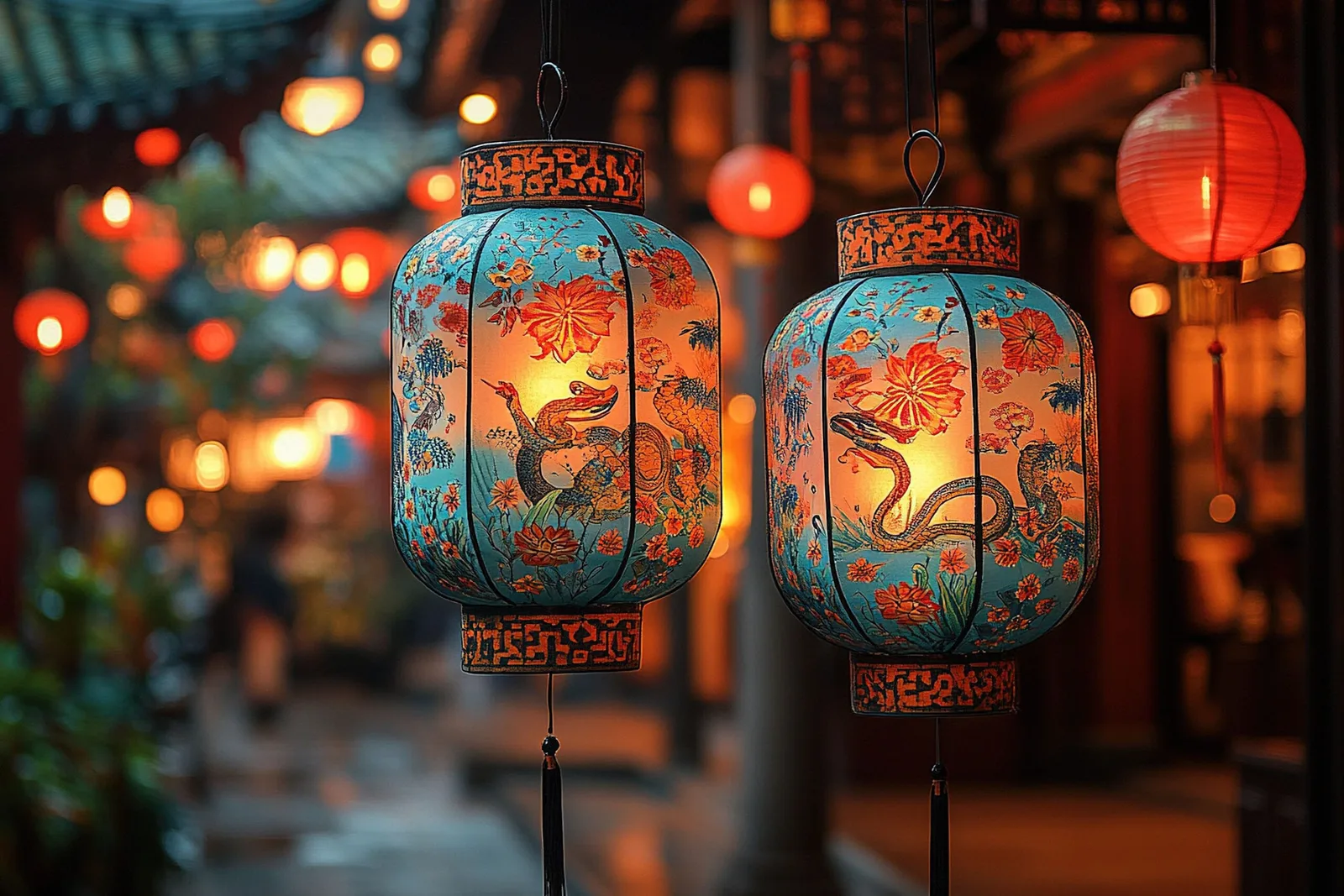
Leaving the capital aboard the high-speed trains – an experience that in itself speaks of the extraordinary, quiet efficiency of contemporary China – you head west, where the pace of the journey slows to make room for memory. The historic town of Pingyao welcomes travellers as an authentic jewel of the Qing dynasty, perfectly preserved within its mighty ancient walls. Strolling along the traditional Ming and Qing streets gives the illusion of standing on an open-air film set. It is no coincidence that the magnificent Qiao Family Compound was chosen by director Zhang Yimou as the backdrop for his masterpiece “Raise the Red Lantern”. Among these courtyards and in the nearby Rishengchang, China’s first true draft bank, you breathe the atmosphere of the golden age of imperial commerce, completed by the mysticism of the Shuanglin Temple, famous the world over for its incredible sacred sculptures in terracotta.
Continuing to Xi’an, the ancient capital where Marco Polo also lived and where the legendary Silk Road came to an end, you find yourself face to face with one of the most astonishing archaeological discoveries of the twentieth century. The Terracotta Army, brought back to light almost by chance in 1974 thanks to the work of a few farmers digging a well, continues to take the breath away with its monumental uniqueness. Thousands of life-size warriors, each with rigorously unique facial features, hairstyles and expressions, have for centuries watched over the rest of the first emperor, Qin Shi Huang.
The Guiness itinerary also lets you savour the more unusual side of this metropolis. After admiring the Giant Wild Goose Pagoda and the grand Ming-era city walls, the atmosphere changes radically as the sun goes down. The distinctive Muslim Quarter comes alive with lights and sounds, turning into a labyrinth of alleys where the aroma of spices and the local street food offer a unique cultural blend, celebrated during our dinner of traditional Chinese dumplings.
Zhangjiajie: where nature outdoes science fiction
If there is one place on this itinerary capable of completely redefining the idea of wonder, it is without doubt Zhangjiajie National Park. Established in 1982 as the country’s first national reserve, this canyon guards a landscape so primeval and otherworldly that it inspired Hollywood’s directors in creating the floating mountains of the film Avatar. Here geology has created something unrepeatable: gigantic columns of quartzite sandstone rising vertically for hundreds of metres, breaking away from the valley floor and often vanishing into the clouds.
Thanks to the spectacular cable car and the futuristic Bailong Elevator, the world’s tallest outdoor lift set directly into the rock, you climb to the natural platform of Yuanjiajie to look down on a breathtaking panorama. The walk down along the Golden Whip Stream offers the opposite perspective, giving you the deep silence of an enchanted forest. The adventure in this region reaches its climax at Tianmen Mountain, home to “Heaven’s Gate”: an imposing natural rock arch a full 130 metres high that looks like a monumental window opening onto the sky, before descending into the depths of the Yellow Dragon Cave, one of the vastest and most spectacular underground caverns of any journey to China.
Suzhou and Shanghai: from the “Venice of the East” to the verticality of tomorrow
The grand finale of the journey is a time accelerator, carrying travellers from the poetic calm of the water to the hyper-futurism of the most populous metropolis in the world. Before reaching the skyscrapers, we stop in Suzhou, romantically known as the “Venice of the East” for the dense network of canals and stone bridges that characterises it. The Chinese art of landscape reaches its peak here in the Humble Administrator’s Garden, where every view, pond and pavilion is designed to create perfect inner harmony. Exploring the water town of Tongli and strolling along historic Pingjiang Road, you rediscover the China of traditional whitewashed houses, silk shops and atmospheres of another age.
And finally, Shanghai, the place where the future seems to have arrived well ahead of the rest of the planet. The visual and emotional contrast here is total. On one side is the ancient soul of the Old City, with the pavilions of the Yu Garden and the spiritual silence of the Jade Buddha Temple. On the other is the Bund, the famous colonial waterfront lined with early twentieth-century buildings that looks straight across the Huangpu river at the Pudong district.
Until the 1990s this area was occupied only by farmland and old warehouses; today it is one of the most iconic and futuristic skylines on Earth, dominated by the television tower. Walking among the lights of Pudong in the evening, losing yourself in the shops along Nanjing Road or strolling through the fashionable lanes of Xintiandi, in the old French Concession, means feeling yourself at the exact centre of the contemporary world.
The Guiness experience: travelling without a care
An itinerary this rich, crossing such varied geographical settings and requiring domestic flights and high-speed trains, needs flawless direction. Choosing Guiness Travel means relying on an attention to detail that begins with the best scheduled airlines and continues with the choice of selected hotels and expert local guides.
But the real added value is the constant presence of the Guiness tour leader, on hand for the entire journey. They will guide you not only on the daily visits but also on the evocative “by night” walks, turning a great itinerary into an experience of excellence, safe and unforgettable. The China you never expected is ready to reveal itself: all that remains is to pack your bags.

'%3e%3cg id='Final-Copy-2_2_' transform='translate(1275.000000, 200.000000)'%3e%3cpath class='st0' d='M7.4,12.8h6.8l3.1-11.6H7.4C4.2,1.2,1.6,3.8,1.6,7S4.2,12.8,7.4,12.8z'/%3e%3c/g%3e%3c/g%3e%3c/g%3e%3cg id='final---dec.11-2020'%3e%3cg id='_x30_208-our-toggle' transform='translate(-1275.000000, -200.000000)'%3e%3cg id='Final-Copy-2' transform='translate(1275.000000, 200.000000)'%3e%3cpath class='st1' d='M22.6,0H7.4c-3.9,0-7,3.1-7,7s3.1,7,7,7h15.2c3.9,0,7-3.1,7-7S26.4,0,22.6,0z M1.6,7c0-3.2,2.6-5.8,5.8-5.8 h9.9l-3.1,11.6H7.4C4.2,12.8,1.6,10.2,1.6,7z'/%3e%3cpath id='x' class='st2' d='M24.6,4c0.2,0.2,0.2,0.6,0,0.8l0,0L22.5,7l2.2,2.2c0.2,0.2,0.2,0.6,0,0.8c-0.2,0.2-0.6,0.2-0.8,0 l0,0l-2.2-2.2L19.5,10c-0.2,0.2-0.6,0.2-0.8,0c-0.2-0.2-0.2-0.6,0-0.8l0,0L20.8,7l-2.2-2.2c-0.2-0.2-0.2-0.6,0-0.8 c0.2-0.2,0.6-0.2,0.8,0l0,0l2.2,2.2L23.8,4C24,3.8,24.4,3.8,24.6,4z'/%3e%3cpath id='y' class='st3' d='M12.7,4.1c0.2,0.2,0.3,0.6,0.1,0.8l0,0L8.6,9.8C8.5,9.9,8.4,10,8.3,10c-0.2,0.1-0.5,0.1-0.7-0.1l0,0 L5.4,7.7c-0.2-0.2-0.2-0.6,0-0.8c0.2-0.2,0.6-0.2,0.8,0l0,0L8,8.6l3.8-4.5C12,3.9,12.4,3.9,12.7,4.1z'/%3e%3c/g%3e%3c/g%3e%3c/g%3e%3c/g%3e%3c/svg%3e) Cookie preferences
Cookie preferences