

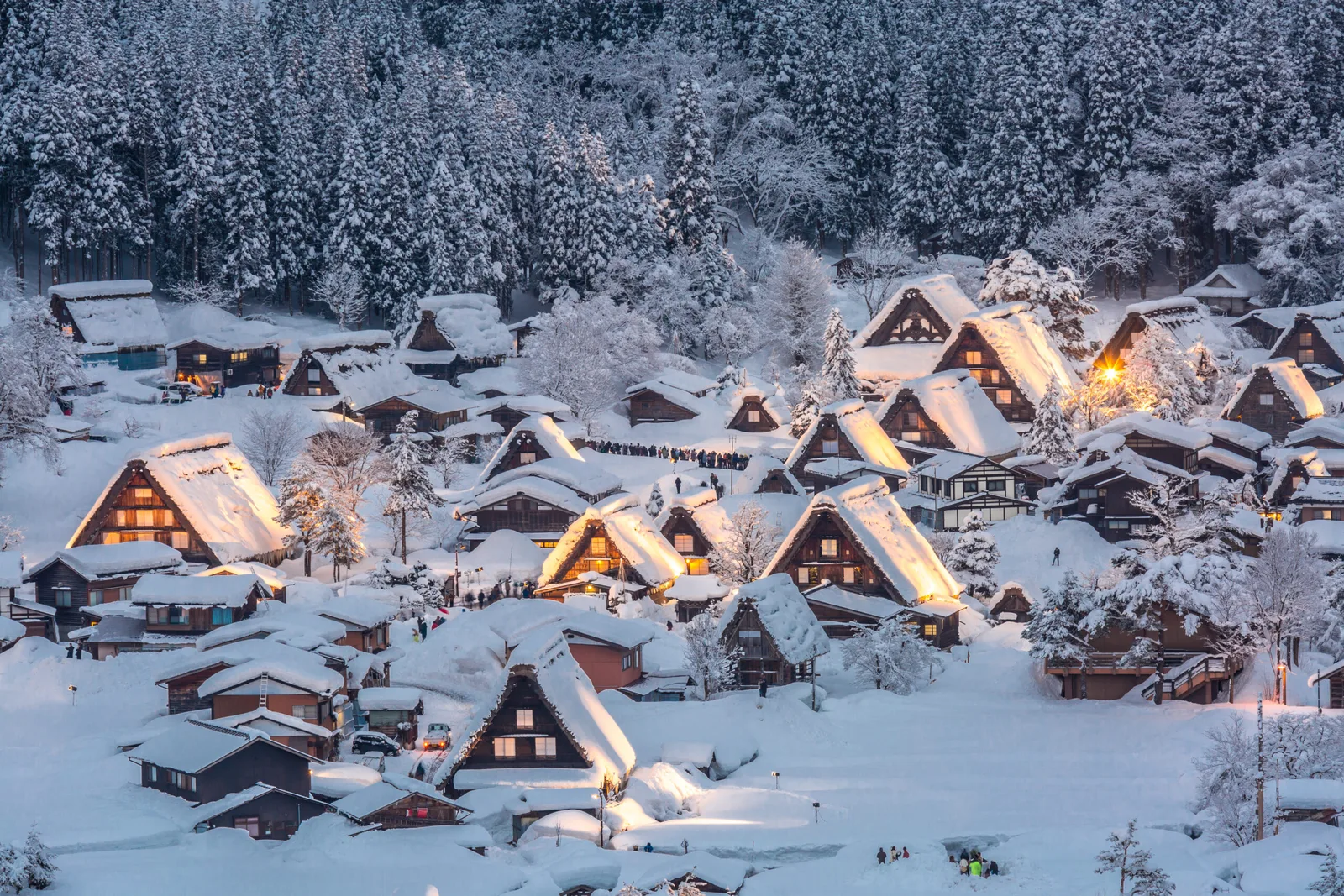
In a country that has built part of its international image on technology, high-speed trains and metropolises lit up twenty-four hours a day, spending a night on Mount Hiei is an almost disorienting experience.
The sounds of the city give way to the wind moving through the woods, to the paths linking the buildings of the Enryakuji monastery and to the scent of incense that accompanies the evening activities. You do not come here in search of yet another view to post on social media. Or rather, not only for that. You come to connect with a part of authentic Japan that often falls outside the more conventional itineraries.
And this is precisely the thread running through this tour of Japan. On one side, the places everyone dreams of at least once in their life: Tokyo, Kyoto, Osaka and Mount Fuji. On the other, lesser-known experiences that help you understand the country better, along with the way the Japanese live the relationship between modernity and tradition.
Osaka: the city that never sleeps
Many travellers arrive in Japan with Tokyo already in mind, yet very often the arrival in Japan comes by way of Osaka. More spontaneous, more direct and less formal than the capital, Osaka is regarded by many Japanese as the most sociable city in the country. People come here to eat well, go out in the evening and enjoy an urban atmosphere that has little to do with the stereotypes of rigour and composure we so often associate with Japan.
Just think of the Dotonbori district. Giant screens, illuminated signs, venues open until late at night and an energy that almost recalls certain districts of Seoul or Hong Kong. It is no coincidence that many creators and influencers who tell the story of Japan on social media choose Osaka to show the country’s most dynamic and contemporary face. A stroll along the canal at sunset means immersing yourself in one of the most iconic places of urban Asia, where Japanese culinary tradition meets pop culture, video games and the latest trends.
From the Umeda Sky Building you grasp just how much this city is also one of Japan’s economic capitals. From up there, the view tells of a modern, ambitious metropolis, built to look ahead without forgetting its past, well represented by the imposing Osaka Castle that still dominates the urban skyline.
Kyoto and Mount Hiei
For many visitors, Kyoto is the very image of Japan. The historic lanes of Ninenzaka and Sannenzaka, Kiyomizu Temple, the Gion district and the old wooden houses have over the years become the subject of millions of photographs shared on Instagram. Yet Kyoto retains an authentic charm, because behind the most celebrated images there is a city that preserves a deep relationship with its own history.
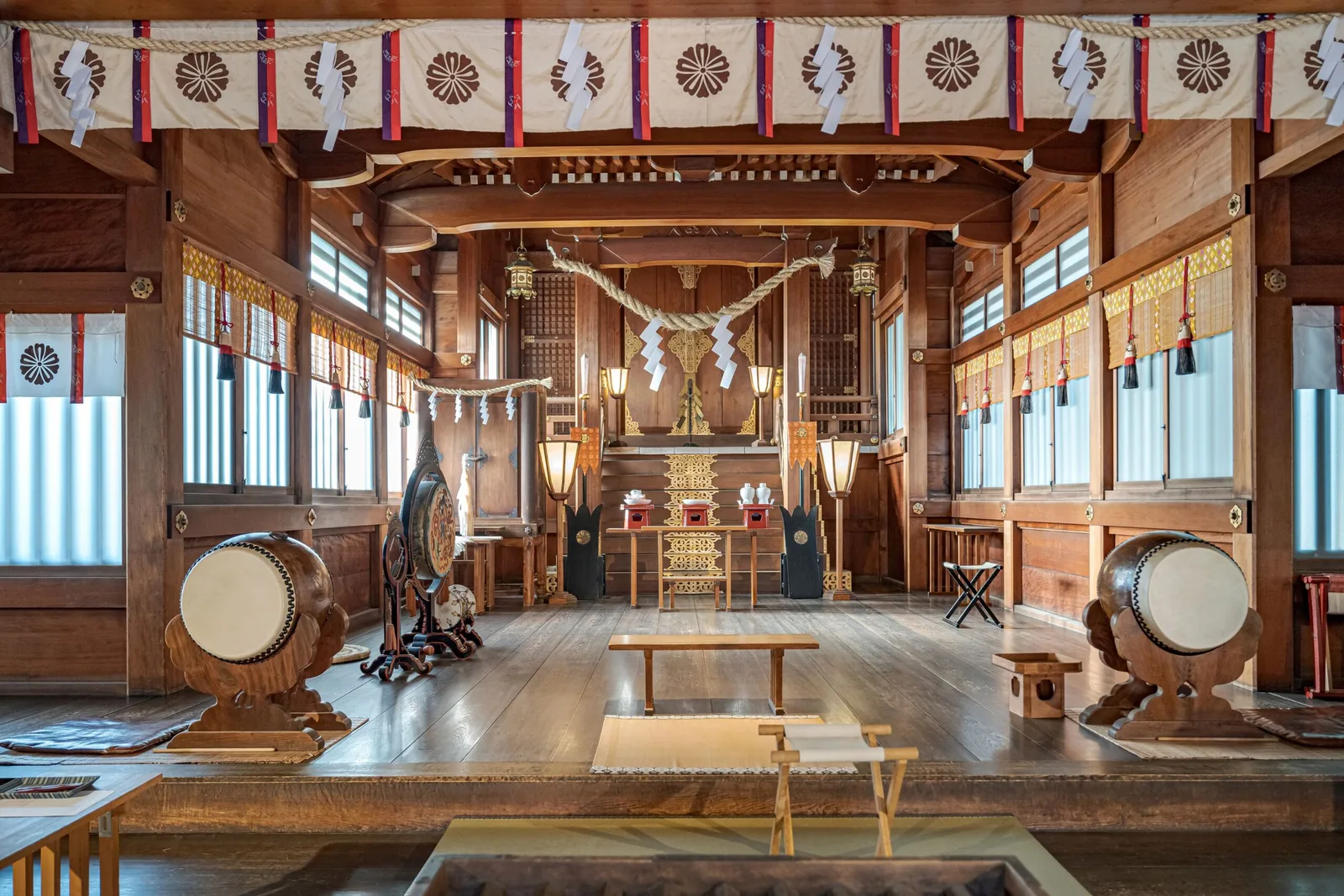
The real surprise of this itinerary, however, lies just outside the city. Mount Hiei almost never features in the rankings of Japan’s most visited attractions, yet it holds a fundamental place in the country’s spiritual history. This is the site of the Enryakuji monastic complex, a cultural heritage of extraordinary importance and a place of training for generations of Buddhist monks.
Staying overnight in this area means experiencing a dimension entirely different from that of the big cities. At sunset, when the day visitors leave the mountain, silence takes centre stage once more. The paths through the woods, the scent of incense and the activities offered by the monks allow you to connect with a part of Japan rarely told on social networks. In an age dominated by notifications, fast content and constant connection, spending a few hours in a place like this becomes almost a small luxury.
Among bamboo, deer and ancient capitals
If Kyoto is the cultural heart of the country, the excursions in its surroundings help you understand its soul better. The Arashiyama Bamboo Grove is one of the most photographed places in Japan and, despite its worldwide fame, still retains an extraordinary capacity to surprise. There is something hypnotic in the sound of the wind moving through the tall bamboo stalks, so much so that Japan’s Ministry of the Environment has listed it among the country’s most precious soundscapes.
The equally famous Golden Pavilion, Kinkakuji, continues to enchant generations of travellers with its perfect reflection on the water. It is an image that regularly appears in Japanese tourism campaigns and that, seen in person, still manages to astonish.
The excursion to Nara adds another perspective. Japan’s first permanent capital, the city preserves some of the country’s most important artistic treasures. But what strikes many visitors most are the famous deer roaming freely in the city park. Regarded as divine messengers in the Shinto tradition, they have become genuine international celebrities, the stars of millions of videos shared on social media every year.
Mount Fuji and the picture-postcard Japan that really exists
There are images that seem to belong more to fantasy than to reality. The Chureito Pagoda with Mount Fuji in the background is one of them. And yet it really does exist. Reaching this area means entering the Japan of the great panoramic photographs, but also discovering the strong spiritual bond the Japanese have always had with their most famous mountain. Fuji is not simply a peak. It is a national symbol, a cultural and artistic presence spanning centuries of history.
Places such as Oshino Hakkai, with its small ponds fed by water filtered through the volcanic rock of Mount Fuji, speak of a relationship with nature very different from the Western one. Here the landscape is considered not merely beautiful to look at, but worthy of respect and veneration.
A journey that shows more than one Japan
The strength of this journey to Japan lies precisely in its ability to tell of the different souls of the same country. The vitality of Osaka, the spirituality of Mount Hiei, the refinement of Kyoto, the landscapes of Mount Fuji and the inexhaustible energy of Tokyo make up a rich, many-sided mosaic.
It is an itinerary that lets you see the landmark places everyone dreams of, but also draw closer to a less predictable Japan, made of traditions still alive, authentic experiences and constant contrasts between past and future. And perhaps it is precisely this ability to surprise, in a different way every day, that keeps Japan among the most desired destinations in the world.

'%3e%3cg id='Final-Copy-2_2_' transform='translate(1275.000000, 200.000000)'%3e%3cpath class='st0' d='M7.4,12.8h6.8l3.1-11.6H7.4C4.2,1.2,1.6,3.8,1.6,7S4.2,12.8,7.4,12.8z'/%3e%3c/g%3e%3c/g%3e%3c/g%3e%3cg id='final---dec.11-2020'%3e%3cg id='_x30_208-our-toggle' transform='translate(-1275.000000, -200.000000)'%3e%3cg id='Final-Copy-2' transform='translate(1275.000000, 200.000000)'%3e%3cpath class='st1' d='M22.6,0H7.4c-3.9,0-7,3.1-7,7s3.1,7,7,7h15.2c3.9,0,7-3.1,7-7S26.4,0,22.6,0z M1.6,7c0-3.2,2.6-5.8,5.8-5.8 h9.9l-3.1,11.6H7.4C4.2,12.8,1.6,10.2,1.6,7z'/%3e%3cpath id='x' class='st2' d='M24.6,4c0.2,0.2,0.2,0.6,0,0.8l0,0L22.5,7l2.2,2.2c0.2,0.2,0.2,0.6,0,0.8c-0.2,0.2-0.6,0.2-0.8,0 l0,0l-2.2-2.2L19.5,10c-0.2,0.2-0.6,0.2-0.8,0c-0.2-0.2-0.2-0.6,0-0.8l0,0L20.8,7l-2.2-2.2c-0.2-0.2-0.2-0.6,0-0.8 c0.2-0.2,0.6-0.2,0.8,0l0,0l2.2,2.2L23.8,4C24,3.8,24.4,3.8,24.6,4z'/%3e%3cpath id='y' class='st3' d='M12.7,4.1c0.2,0.2,0.3,0.6,0.1,0.8l0,0L8.6,9.8C8.5,9.9,8.4,10,8.3,10c-0.2,0.1-0.5,0.1-0.7-0.1l0,0 L5.4,7.7c-0.2-0.2-0.2-0.6,0-0.8c0.2-0.2,0.6-0.2,0.8,0l0,0L8,8.6l3.8-4.5C12,3.9,12.4,3.9,12.7,4.1z'/%3e%3c/g%3e%3c/g%3e%3c/g%3e%3c/g%3e%3c/svg%3e) Cookie preferences
Cookie preferences