

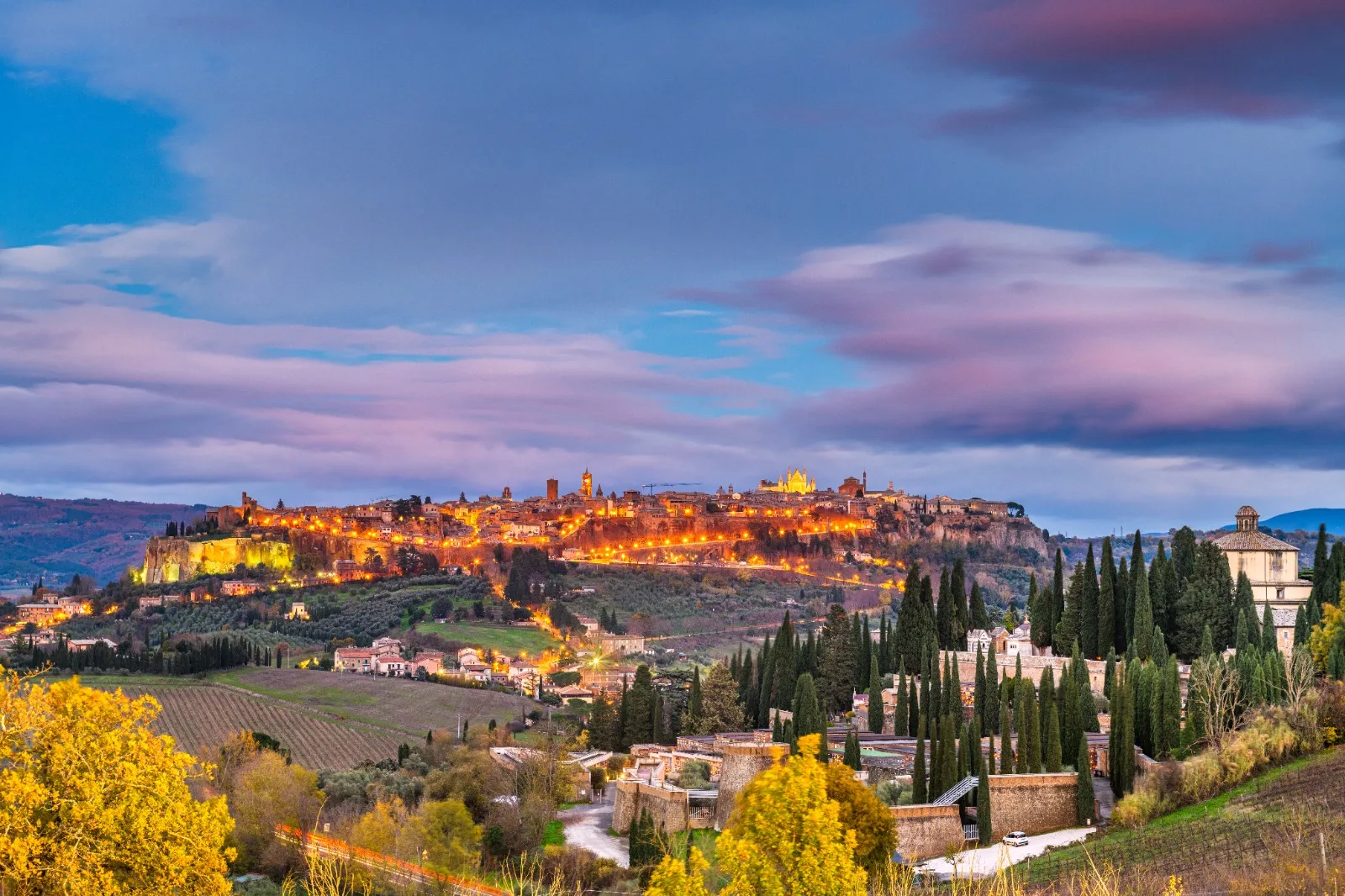
Narrow intersecting alleys, ancient palaces, fortresses perched on high, historical episodes that have become the stuff of legend and evocative atmospheres… these are the elements that define Italy’s medieval villages.
Visiting these places steeped in history, it is often possible to relive the atmosphere of a distant past, by touring the local monuments or simply strolling through the village streets.
Italy is rich in such places, some more famous than others, that recount the deeds and stories of an ancient, endlessly fascinating past. Every region of our peninsula can count on towns, fortresses and villages that still seem to live in a magical dimension, outside time.
The historical events that marked Italy during the Middle Ages, and the particular political situation of Italy at the time, still divided into several states, certainly contributed to this flowering of fortified settlements.
Even today it is possible to relive certain historical episodes of the past through festivals, fairs and celebrations that draw many visitors.
Bard – Aosta Valley
The little village of Bard could be the enchanted setting of an old book of fairy tales: from the hill on which it stands, at around 400 metres, you can enjoy a breathtaking landscape framed by the surrounding mountains.
The layout of the historic centre is typical of the past: a maze of narrow intersecting alleys lined with stone houses. Visitors are captivated by the celebrated Fort of Bard, perched on a high hill a short distance from the village; its construction dates back to 1034, and it was later enlarged and remodelled over the following centuries.
In the 1800s it was the scene of the legendary clash between Napoleon’s troops and the Austro-Piedmontese army which, after days of French assault on the fort, was forced to sign its surrender.
The centre of the village is also rich in historic buildings, such as the twelfth-century parish church dedicated to the Assumption of Mary which, though remodelled in the 1800s, retains a Romanesque-style bell tower; also of interest are the Casa del Vescovo, Casa Valperga, Casa Ciucca and Casa della Meridiana, built between the fifteenth and sixteenth centuries.
Vernazza – Liguria
Famous and visited by tourists from almost every corner of the world, Vernazza is one of the most celebrated spots of the Cinque Terre. A little jewel, distinguished by the typical colourful houses of the Cinque Terre, overlooking the crystal-clear sea and offering visitors unique views.
The history of Vernazza begins in 1056, when the Obertenghi, the noble family that ruled these lands between the eleventh and twelfth centuries, built a first fortification to spot enemies and defend against the raids of Saracen pirates.
Of notable historical and architectural interest are the village’s places of worship, such as the church of Santa Margherita d’Antiochia, built in 1318 in a spectacular position perched above the sea. Legend has it that the finger of the saint to whom the building is dedicated was found on the spot where the church now stands.
Equally interesting is the Church of San Francesco, built in the 1600s, which today houses a cultural venue for musical performances as well as the town hall.
San Gimignano – Tuscany
Tuscany is among the Italian regions richest in medieval villages of notable historical interest, whose charm is celebrated the world over.
Volterra, San Miniato, Pienza, Cortona, Fiesole, Pitigliano, Monteriggioni, Montalcino and Montepulciano are just some of the villages that every year become the destination of thousands of tourists who appreciate their charm, history and monuments; not by chance, many of these places have been listed among UNESCO World Heritage Sites.
San Gimignano, a UNESCO World Heritage Site, is one of the most famous medieval villages; its many towers, no fewer than 14, define the urban fabric and make it instantly recognisable.
The 54-metre Torre del Podestà, also known as Torre Grossa, is the tallest in the town; to this are added the 51-metre Torre Rognosa, the Torri degli Ardinghelli dating from the 1200s, the Torre dei Becci, the Torre del Diavolo, the Torre dei Cugnanesi and the Torre dei Chigi in Piazza del Duomo.
The history of San Gimignano begins with the Etruscans in the third century BC, continuing under Lombard rule before the town became, in the Middle Ages, one of the stops on the Via Francigena, the route used by Sigeric, Archbishop of Canterbury, to return to England from Rome. It was he who gave the town its name.
It was during the 1200s, under Ghibelline rule, that San Gimignano saw remarkable economic growth; and it was precisely in this period that the famous towers were built, as many as 71 by the fourteenth century.
Within the village you are spoilt for choice: there are numerous churches, palaces and museums that deserve a visit.
The villages of Sicily
The island, too, celebrated for its historical and artistic treasures and its unique natural landscapes, boasts numerous medieval villages full of charm.
Erice, also known as the “Sicilian rock”, perched at 750 metres, offers a splendid view over the Gulf of Trapani on one side and Valderice on the other.
On some days it happens to be wrapped in a blanket of low cloud that hides the view of the landscape, yet makes it all the more evocative and mysterious.
The historic centre is distinguished by a meeting of narrow lanes, churches and squares full of stone palaces, craft shops, restaurants and celebrated pastry shops.
A visit to the town can begin at the Cyclopean Walls and continue to the twelfth-century Norman Castle, also known as the Castle of Venus; not to be forgotten are the Cathedral, the Giardino del Balio and the Pepoli Castle.
Just as celebrated and visited is the town of Cefalù, in the province of Palermo; thousands of tourists choose it in summer thanks to the splendid beaches of the surrounding area.
The historic centre is made up of narrow streets, paved in cobbles and limestone, that intersect one another and let the visitor relive an atmosphere outside time.
Absolutely not to be missed is the Cathedral, built by Roger II and an example of the high level reached by Byzantine craftsmen in the art of mosaic.
Just as unmissable are the celebrated medieval wash-house, in Via Vittorio Emanuele, and the spectacular church of San Giorgio, dating from the Norman period.
Choose Guiness Travel’s tours
Italy’s medieval villages are rich in history and culture and deserve a thorough visit from a cultural point of view.
This travel philosophy is at the heart of tours by Guiness Travel, which seek not merely to visit places, but to convey the cultural atmosphere that brings them to life.
For Guiness, travelling is an enriching experience to be savoured in every pleasant moment and means feeling pampered by every kind of comfort; the only way to guarantee the well-being of participants and respect for the places visited is to open our tours only to a limited number of participants, carefully selected.
All the itineraries in our catalogue are 100% independently planned and carefully designed and tested, allowing our product to evolve constantly and to reach a high, wide-ranging cultural standard.
This is why we created the Guiness Exclusive Tour, a unique travel experience, mindful of sustainability, that offers you considerable advantages:
- organisation;
- attention to detail;
- carefully selected services on the ground (designed to give you maximum comfort, leaving you free to think of nothing but enjoying the moment).
Thanks to the Guiness Exclusive Tour you will return home with a suitcase full of new and wonderful memories, immersed in the beauty of the world, thanks also to the many UNESCO World Heritage Sites included in all our programmes.
Indeed, in all our itineraries you can see at a glance how many and which UNESCO sites you will be able to visit, thanks to an intuitive, user-friendly icon in the catalogue. In this way, travellers will know which UNESCO sites are included in their travel programme.
Team Guiness


'%3e%3cg id='Final-Copy-2_2_' transform='translate(1275.000000, 200.000000)'%3e%3cpath class='st0' d='M7.4,12.8h6.8l3.1-11.6H7.4C4.2,1.2,1.6,3.8,1.6,7S4.2,12.8,7.4,12.8z'/%3e%3c/g%3e%3c/g%3e%3c/g%3e%3cg id='final---dec.11-2020'%3e%3cg id='_x30_208-our-toggle' transform='translate(-1275.000000, -200.000000)'%3e%3cg id='Final-Copy-2' transform='translate(1275.000000, 200.000000)'%3e%3cpath class='st1' d='M22.6,0H7.4c-3.9,0-7,3.1-7,7s3.1,7,7,7h15.2c3.9,0,7-3.1,7-7S26.4,0,22.6,0z M1.6,7c0-3.2,2.6-5.8,5.8-5.8 h9.9l-3.1,11.6H7.4C4.2,12.8,1.6,10.2,1.6,7z'/%3e%3cpath id='x' class='st2' d='M24.6,4c0.2,0.2,0.2,0.6,0,0.8l0,0L22.5,7l2.2,2.2c0.2,0.2,0.2,0.6,0,0.8c-0.2,0.2-0.6,0.2-0.8,0 l0,0l-2.2-2.2L19.5,10c-0.2,0.2-0.6,0.2-0.8,0c-0.2-0.2-0.2-0.6,0-0.8l0,0L20.8,7l-2.2-2.2c-0.2-0.2-0.2-0.6,0-0.8 c0.2-0.2,0.6-0.2,0.8,0l0,0l2.2,2.2L23.8,4C24,3.8,24.4,3.8,24.6,4z'/%3e%3cpath id='y' class='st3' d='M12.7,4.1c0.2,0.2,0.3,0.6,0.1,0.8l0,0L8.6,9.8C8.5,9.9,8.4,10,8.3,10c-0.2,0.1-0.5,0.1-0.7-0.1l0,0 L5.4,7.7c-0.2-0.2-0.2-0.6,0-0.8c0.2-0.2,0.6-0.2,0.8,0l0,0L8,8.6l3.8-4.5C12,3.9,12.4,3.9,12.7,4.1z'/%3e%3c/g%3e%3c/g%3e%3c/g%3e%3c/g%3e%3c/svg%3e) Cookie preferences
Cookie preferences