

The Old and New Worlds are full of wonders that deserve to be seen: from evocative cities to splendid natural landscapes, by way of villages and spectacular architecture.
This is why UNESCO, whose purpose since 16 November 1972 has been to identify and draw up the list of sites of exceptional importance from a cultural or natural point of view, has designated a total of 1,154 sites (of which 897 cultural, 218 natural and 39 mixed) in 167 countries around the world.
Indeed, UNESCO’s mission is to identify, protect, safeguard and pass on to future generations the cultural and natural heritage of the whole world.
This is why travelling to discover the UNESCO sites scattered across the continents is an unforgettable experience.
UNESCO-protected sites in Europe
Among the UNESCO sites in Europe, you are simply spoilt for choice.
For lovers of adventure, incredible natural wonders await, such as the Plitvice Lakes, halfway between Zadar and Zagreb, in Croatia.
This natural marvel is part of the Plitvice Lakes National Park, distinguished by 16 lakes linked to one another by a network of channels and waterfalls, whose waters take on crystalline shades of emerald and turquoise.
Flowing over chalk and limestone for thousands of years, the water here has managed to create incredible caves and inlets, giving rise to veritable natural dams.
Or the Giant’s Causeway in Ireland, volcanic formations of the most ancient origin lapped by the waves of the Atlantic.
In Poland, meanwhile, lies the Białowieża Forest, an ancient primeval forest on the border between Poland and Belarus, a relic of what was once the immense green lung stretching across the whole of Europe.
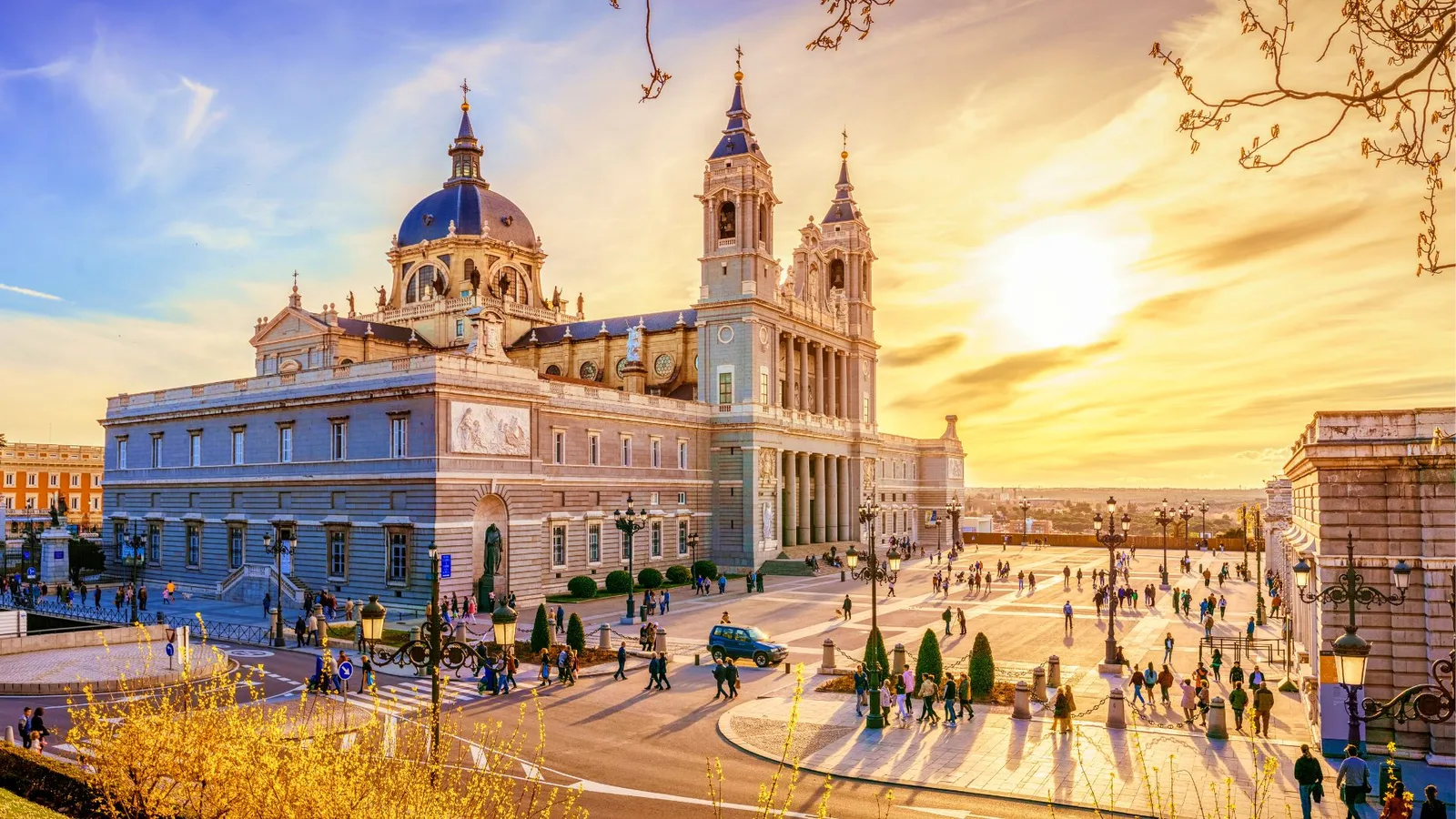
Near the city of Ponferrada, in Spain, is one of the most unusual UNESCO sites in Europe, indeed in the world. This is Las Médulas, a landscape strongly reminiscent of the great American parks, once famous as the largest gold mine in the Roman Empire.
In this area you can admire a majestic work of Roman engineering, which transformed the mountains of red earth to create an open-cast mine.
Lovers of fairy-tale settings, on the other hand, can opt for Mont-Saint-Michel, the abbey complex set on a tidal island in Normandy.
This is a Gothic Benedictine abbey standing on the border between Normandy and Brittany: built between the eleventh and sixteenth centuries, this religious building perches on a small island exposed to spectacular tides, which offer visitors a spectacle unique of its kind.
Meteora, in Greece, also offers an atmosphere of deep contemplation in a unique setting. This complex of monasteries lies in Thessaly, near the small town of Kalambaka, and was built on sandstone cliffs, reached by stairways carved into the rock.
Of the 24 monasteries in the complex, only six are still inhabited, recovered after years of abandonment.
In 1989, meanwhile, the Monastery of Alcobaça, in Portugal, one of the most impressive examples of Cistercian architecture in Europe, joined the World Heritage List.
The entrance is distinguished by a grandiose central nave, and inside the church are masterpieces of medieval sculpture.
Turning to cities proper, among the UNESCO-protected sites in Europe Mostar, in Bosnia and Herzegovina, certainly deserves a visit. It is a historic city in the south of the country, on the river Neretva, famous for its Old Bridge, built in the sixteenth century and considered one of the greatest architectural achievements in the Balkans.
Visby, the largest town on the island of Gotland, in Sweden, also deserves a visit. It is considered the best-preserved medieval town in the whole country. Its most significant monuments are the town wall, known as the Ringmuren and 3.4 kilometres long, and the ruins of its ancient churches.
UNESCO-protected sites around the world
The other continents, too, hold real surprises that fill every visitor with wonder.
Among the most celebrated sites is the Taj Mahal in India, whose sinuous forms celebrate eternal love. Located in Agra, in the state of Uttar Pradesh in northern India, the Taj Mahal – which literally means “Crown Palace” – dates back to 1631, the year in which the emperor’s favourite wife, known as Mumtaz Mahal, which in Persian means “the light of the palace”, died giving birth to her fourteenth child.
It is said that on her deathbed Mumtaz Mahal asked the emperor to keep four promises, among them to remember her with an imposing monument.
Angkor, in Cambodia, is also counted among the most important archaeological sites in South-East Asia. The park extends over some 400 square kilometres, including the forested area.
Within the Archaeological Park are preserved the magnificent remains of the various capitals of the Khmer Empire, from the ninth to the fifteenth century, including dozens of temples, hydraulic structures and roads.
Among the most imposing and important monuments stands the Temple of Angkor Wat, built by King Suryavarman II from the first half of the twelfth century and considered the largest religious building in the world.
Moving further east still, it is impossible not to mention the Great Wall of China, a work of grandiose civil engineering, an architectural masterpiece that has become a true symbol of China and a testament to its age-old history.
This complex of defensive walls and fortifications officially winds for more than 8,850 kilometres, although only a few sections of the original wall, damaged by external attacks and the elements, survive. The length of the whole work, including all the branches built over thousands of years, is estimated at 21,196 kilometres.
The Great Wall became a UNESCO site for its exceptional man-made structure, a perfect example of architecture integrated into the landscape, and for its emblematic testimony to the civilisations of ancient China.
The Pyramids of Giza in Egypt, meanwhile, together with the ancient city of Memphis and its Necropolis, were declared a UNESCO World Heritage site in 1979.
Within the Necropolis of the capital of Egypt’s Old Kingdom are preserved extraordinary funerary monuments, including rock-cut tombs, ornate mastabas, temples and, of course, the imposing pyramids.
In particular, in the Necropolis of Giza, about 25 km from Cairo, the three Pyramids of Khufu, Khafre and Menkaure stand out alongside the Sphinx.
The Old City of Jerusalem, in Israel, has also become a UNESCO site. The whole area enclosed within the ancient walls is not only a holy city for religions such as Judaism, Christianity and Islam, but has always held unparalleled historical, cultural and religious importance.
There are more than 200 historic monuments, including some of the holiest sites of the three monotheistic religions: among them the Temple Mount and the Western Wall, the Church of the Holy Sepulchre for Christians, the Dome of the Rock and the al-Aqsa Mosque.
In America, the great national parks of the United States, including Yellowstone, are the ideal opportunity for an unforgettable encounter with nature.
The site of Machu Picchu, in Peru, is a treasure chest of great archaeological riches that enchant everyone, as do the great Iguazu Falls, on the border between Brazil and Argentina.
In Australia, the daring architecture of the Sydney Opera House, the youngest cultural landmark to be added to the UNESCO World Heritage sites, dominates the bay of the city of the same name, offering an unforgettable picture-postcard view.
Choose Guiness Travel Tours
Guiness Travel is the tour operator most attentive to the choice of places and the well-being of travellers.
Guiness’s philosophy has always been to conceive and create a journey that is a marvellous frame of life.
According to our philosophy, travelling is an educational opportunity to be savoured in every pleasant moment, to feel pampered by our care and by every kind of comfort.
This is why we created the Exclusive Guiness Tour: a unique travel experience, attentive to sustainability, which will give you significant advantages:
- organisation;
- attention to detail;
- carefully selected services on the ground (designed to give you maximum comfort, leaving you free to think of nothing but enjoying the moment).
Thanks to the Exclusive Guiness Tour you will return home with a bag full of new and wonderful memories, immersed in the beauties of the world, thanks also to the many UNESCO World Heritage sites included in all our programmes.
In fact, in all our itineraries you can see immediately how many and which UNESCO sites you will be able to visit, thanks to an intuitive user-friendly icon in the catalogue.
This way, travellers know which UNESCO sites are included in their travel programme.
Team Guiness


'%3e%3cg id='Final-Copy-2_2_' transform='translate(1275.000000, 200.000000)'%3e%3cpath class='st0' d='M7.4,12.8h6.8l3.1-11.6H7.4C4.2,1.2,1.6,3.8,1.6,7S4.2,12.8,7.4,12.8z'/%3e%3c/g%3e%3c/g%3e%3c/g%3e%3cg id='final---dec.11-2020'%3e%3cg id='_x30_208-our-toggle' transform='translate(-1275.000000, -200.000000)'%3e%3cg id='Final-Copy-2' transform='translate(1275.000000, 200.000000)'%3e%3cpath class='st1' d='M22.6,0H7.4c-3.9,0-7,3.1-7,7s3.1,7,7,7h15.2c3.9,0,7-3.1,7-7S26.4,0,22.6,0z M1.6,7c0-3.2,2.6-5.8,5.8-5.8 h9.9l-3.1,11.6H7.4C4.2,12.8,1.6,10.2,1.6,7z'/%3e%3cpath id='x' class='st2' d='M24.6,4c0.2,0.2,0.2,0.6,0,0.8l0,0L22.5,7l2.2,2.2c0.2,0.2,0.2,0.6,0,0.8c-0.2,0.2-0.6,0.2-0.8,0 l0,0l-2.2-2.2L19.5,10c-0.2,0.2-0.6,0.2-0.8,0c-0.2-0.2-0.2-0.6,0-0.8l0,0L20.8,7l-2.2-2.2c-0.2-0.2-0.2-0.6,0-0.8 c0.2-0.2,0.6-0.2,0.8,0l0,0l2.2,2.2L23.8,4C24,3.8,24.4,3.8,24.6,4z'/%3e%3cpath id='y' class='st3' d='M12.7,4.1c0.2,0.2,0.3,0.6,0.1,0.8l0,0L8.6,9.8C8.5,9.9,8.4,10,8.3,10c-0.2,0.1-0.5,0.1-0.7-0.1l0,0 L5.4,7.7c-0.2-0.2-0.2-0.6,0-0.8c0.2-0.2,0.6-0.2,0.8,0l0,0L8,8.6l3.8-4.5C12,3.9,12.4,3.9,12.7,4.1z'/%3e%3c/g%3e%3c/g%3e%3c/g%3e%3c/g%3e%3c/svg%3e) Cookie preferences
Cookie preferences