

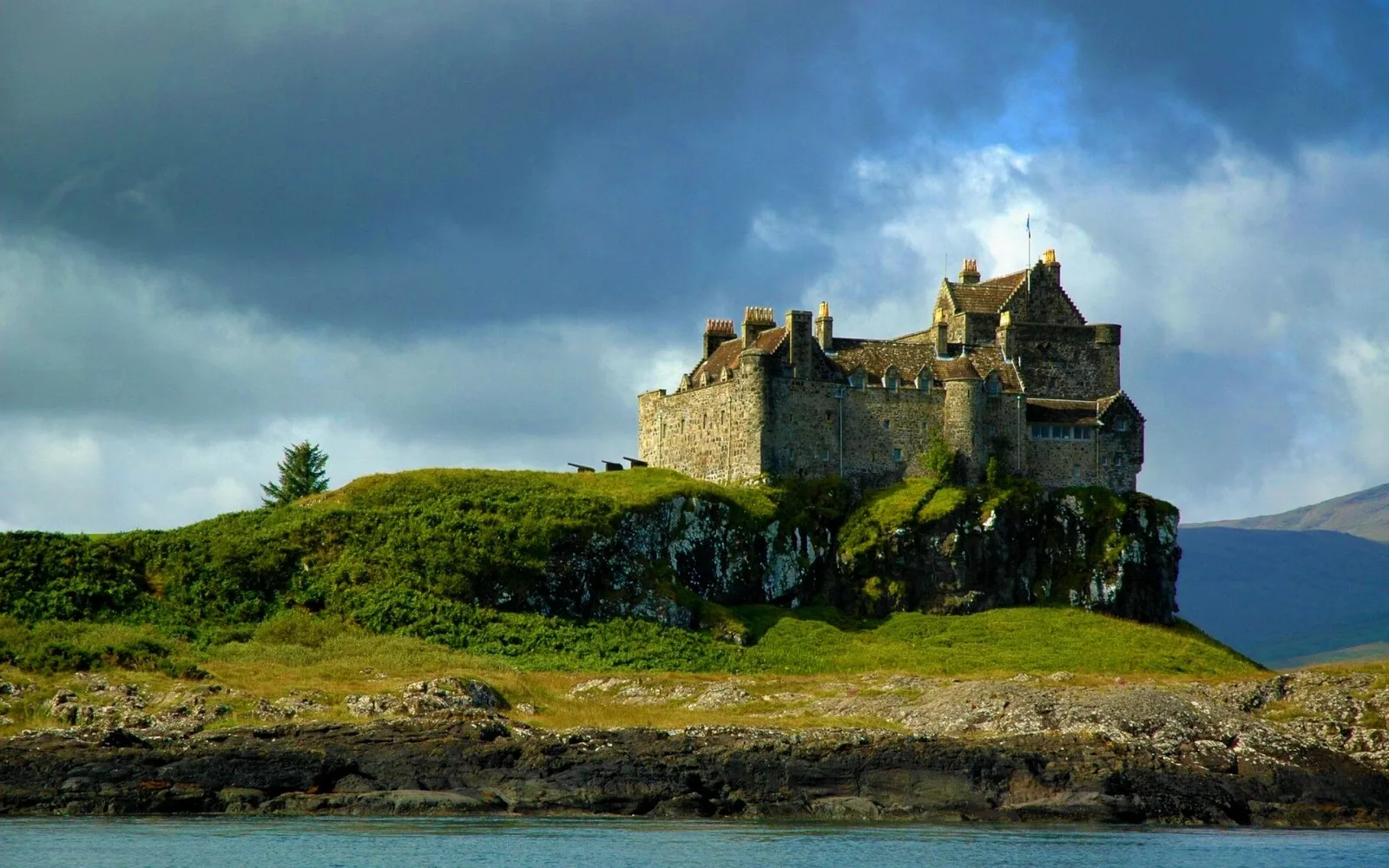
Magic and witchcraft have always fascinated people, who often wish to discover the details of every story and perhaps even visit places shrouded in mystery that have since become legendary. The growing popularity of Halloween celebrations in Italy and the runaway success of literary sagas devoted to wizards and witches have only fuelled this fascination.
In Italy and across Europe there are many places where history and legend have become intertwined, and where anecdotes and testimonies often lend a village, a city, a forest or an entire region a particular flavour of magic and mystery. Witch hunts, secret gatherings of witchcraft, enchanted potions, poisoned wells, magic triangles: in short, none of the ingredients needed to set out and discover another dimension, in space and in time, is missing.
Magical places in Italy
The first stop on our Italian journey in search of places steeped in magic is the medieval village of Triora, in the province of Imperia, perched at around 800 metres in the Argentina Valley. Driving the road that leads to the village, you are enchanted by the dense woods that define the landscape; the village itself is a maze of intersecting lanes, alleys and narrow streets.
This village is famous as the Salem of Italy because between 1587 and 1589 it hosted one of the most celebrated witch trials; in that period dozens of women were accused of witchcraft and of having caused a famine that struck the village for several years.
Today you can visit the Ethnographic and Witchcraft Museum, which has several rooms devoted to this tragic chapter of local history through a reconstruction of the interrogations and imprisonment of the accused women.
The Italian journey continues in the province of Cuneo, in Piedmont, in the village of Rifreddo, a community of 1000 inhabitants on the slopes of Mombracco; this place too is famous for a witch trial held in 1495, all the historical documents of which have been preserved. To promote the local cultural and tourist offering, every year the municipality organises Le Notti delle Streghe (Witches’ Nights), an event with many themed activities for young and old.
Among Italian cities, Benevento (whose ancient name was Maleventum) also has the reputation of being “the city of witches”; during the Lombard era the city was the capital of a duchy and, near the river Sabato, hosted pagan rites performed by men and women who shouted and threw themselves into a series of practices devoted to the god Odin.
With the advent of Christianity, and despite the conversion of the Lombard duke Romuald, the rites continued, though frowned upon by the new official religion; thus arose the legend that those gathering on the nights of the Sabbath were infernal creatures and witches hailing the devil amid fires and screams. Even today in the city you can taste the typical local liqueur known as “Strega di Benevento”.
The last stop of the Italian journey takes in Tuscany, and more precisely Volterra, which traditionally was home to the oldest witches in Italy. They used to gather on Saturday nights beneath the “Masso di Mandriga”, a great stone with an opening at its centre, striking fear into the inhabitants.
Places of witches and magic in Europe
The journey continues in Great Britain, where you are spoilt for choice: there are numerous places linked to magic and to witch hunts. Boscastle, a village on the north coast of Cornwall overlooking the Atlantic Ocean, is a highly evocative spot from a natural point of view, thanks to a breathtaking landscape of green pastures, plains and a fjord-like inlet carved into the coast.
The village is home to the Museum of Witchcraft, which displays one of the largest collections in the world of artefacts connected with witches: books, instruments of torture, potions, collections of household objects, drawings and paintings.
Scotland, too, is famous for the cult of witchcraft, and there are various displays, some interactive, that tell the story of the witches of the area around Edinburgh; Edinburgh Castle itself is home to the famous Witches’ Well, which commemorates the spot where the pyres were built.
Near Perth you can visit a true memorial commemorating the 2500 women condemned for witchcraft; the many testimonies of this kind show how widespread the activity of witches was in Scotland.
Germany is one of the European countries where witch hunts were most widespread; the German journey begins in the medieval town of Goslar, in Lower Saxony, celebrated for its architecture, its historic centre (a UNESCO World Heritage Site), its landscapes and the imperial palace that hosted numerous emperors, including the famous Frederick Barbarossa.
Beyond its artistic treasures, the area around Goslar, and in particular the mountainous Harz region, is famous for the cult of witches. As Goethe recounts in Faust, on Walpurgis Night (between 30 April and 1 May) the witches would gather in this area.
The journey continues in Spain, which also has a Witchcraft Trail made up of various itineraries in the Pyrenees and taking in numerous places made especially evocative by enchanted woods and wonderful architecture.
In the same area lies Zugarramurdi, the village of witches, the scene of a major witch trial in 1610, still reconstructed today inside the Witchcraft Museum. Not far from the village is a cave, wrapped in an aura of mystery and magic, since it seems that in the 1600s the site hosted pagan witchcraft rites.
Numerous witchcraft museums, or museums devoted to witches, can also be found in Austria and Switzerland, countries with several castles (Riegersburg, to name but one) that were the scene of mysterious events and today hold numerous testimonies of times past.
The journey into magic and the realm of the occult also continues with the discovery of famous and important European cities. Prague, for example, is cloaked in many legends and rich in anecdotes.
The topography of the Czech capital lends itself to numerous itineraries in magic and esotericism. The statues of Charles Bridge, one of its most iconic attractions, come to life at night to watch over the children living on the island of Kampa.
The waters of the Vltava, the river that flows through the city, are said to be inhabited by the Vodník, mysterious green water sprites. The best-known legend is that of the Golem, a clay creature with human features endowed with enormous, uncontrollable strength, whose body is said still to be kept, mysteriously, in an attic somewhere in the city of Prague.
Choose Guiness Travel’s tours
These magical places with their enchanted atmosphere, scattered across Europe, can be appreciated all the more if the visitor immerses themselves fully in the local culture and traditions. This travel philosophy is at the heart of tours by Guiness Travel: itineraries designed not merely to visit places, but above all to convey the cultural atmosphere that brings them to life.
For Guiness, travelling is an enriching experience to be savoured in every pleasant moment and means feeling pampered by every kind of comfort; the only way to guarantee the well-being of participants and respect for the places visited is to open our tours only to a limited number of participants, carefully selected.
All the itineraries in our catalogue are 100% independently planned and carefully designed and tested, allowing our product to evolve constantly and to reach a high, wide-ranging cultural standard.
This is why we created the Guiness Exclusive Tour, a unique travel experience, mindful of sustainability, that offers you considerable advantages:
- organisation;
- attention to detail;
- carefully selected services on the ground (designed to give you maximum comfort, leaving you free to think of nothing but enjoying the moment).
Thanks to the Guiness Exclusive Tour you will return home with a suitcase full of new and wonderful memories, immersed in the beauty of the world, thanks also to the many UNESCO World Heritage Sites included in all our programmes.
Indeed, in all our itineraries you can see at a glance how many and which UNESCO sites you will be able to visit, thanks to an intuitive, user-friendly icon in the catalogue. In this way, travellers will know which UNESCO sites are included in their travel programme.
Team Guiness


'%3e%3cg id='Final-Copy-2_2_' transform='translate(1275.000000, 200.000000)'%3e%3cpath class='st0' d='M7.4,12.8h6.8l3.1-11.6H7.4C4.2,1.2,1.6,3.8,1.6,7S4.2,12.8,7.4,12.8z'/%3e%3c/g%3e%3c/g%3e%3c/g%3e%3cg id='final---dec.11-2020'%3e%3cg id='_x30_208-our-toggle' transform='translate(-1275.000000, -200.000000)'%3e%3cg id='Final-Copy-2' transform='translate(1275.000000, 200.000000)'%3e%3cpath class='st1' d='M22.6,0H7.4c-3.9,0-7,3.1-7,7s3.1,7,7,7h15.2c3.9,0,7-3.1,7-7S26.4,0,22.6,0z M1.6,7c0-3.2,2.6-5.8,5.8-5.8 h9.9l-3.1,11.6H7.4C4.2,12.8,1.6,10.2,1.6,7z'/%3e%3cpath id='x' class='st2' d='M24.6,4c0.2,0.2,0.2,0.6,0,0.8l0,0L22.5,7l2.2,2.2c0.2,0.2,0.2,0.6,0,0.8c-0.2,0.2-0.6,0.2-0.8,0 l0,0l-2.2-2.2L19.5,10c-0.2,0.2-0.6,0.2-0.8,0c-0.2-0.2-0.2-0.6,0-0.8l0,0L20.8,7l-2.2-2.2c-0.2-0.2-0.2-0.6,0-0.8 c0.2-0.2,0.6-0.2,0.8,0l0,0l2.2,2.2L23.8,4C24,3.8,24.4,3.8,24.6,4z'/%3e%3cpath id='y' class='st3' d='M12.7,4.1c0.2,0.2,0.3,0.6,0.1,0.8l0,0L8.6,9.8C8.5,9.9,8.4,10,8.3,10c-0.2,0.1-0.5,0.1-0.7-0.1l0,0 L5.4,7.7c-0.2-0.2-0.2-0.6,0-0.8c0.2-0.2,0.6-0.2,0.8,0l0,0L8,8.6l3.8-4.5C12,3.9,12.4,3.9,12.7,4.1z'/%3e%3c/g%3e%3c/g%3e%3c/g%3e%3c/g%3e%3c/svg%3e) Cookie preferences
Cookie preferences