

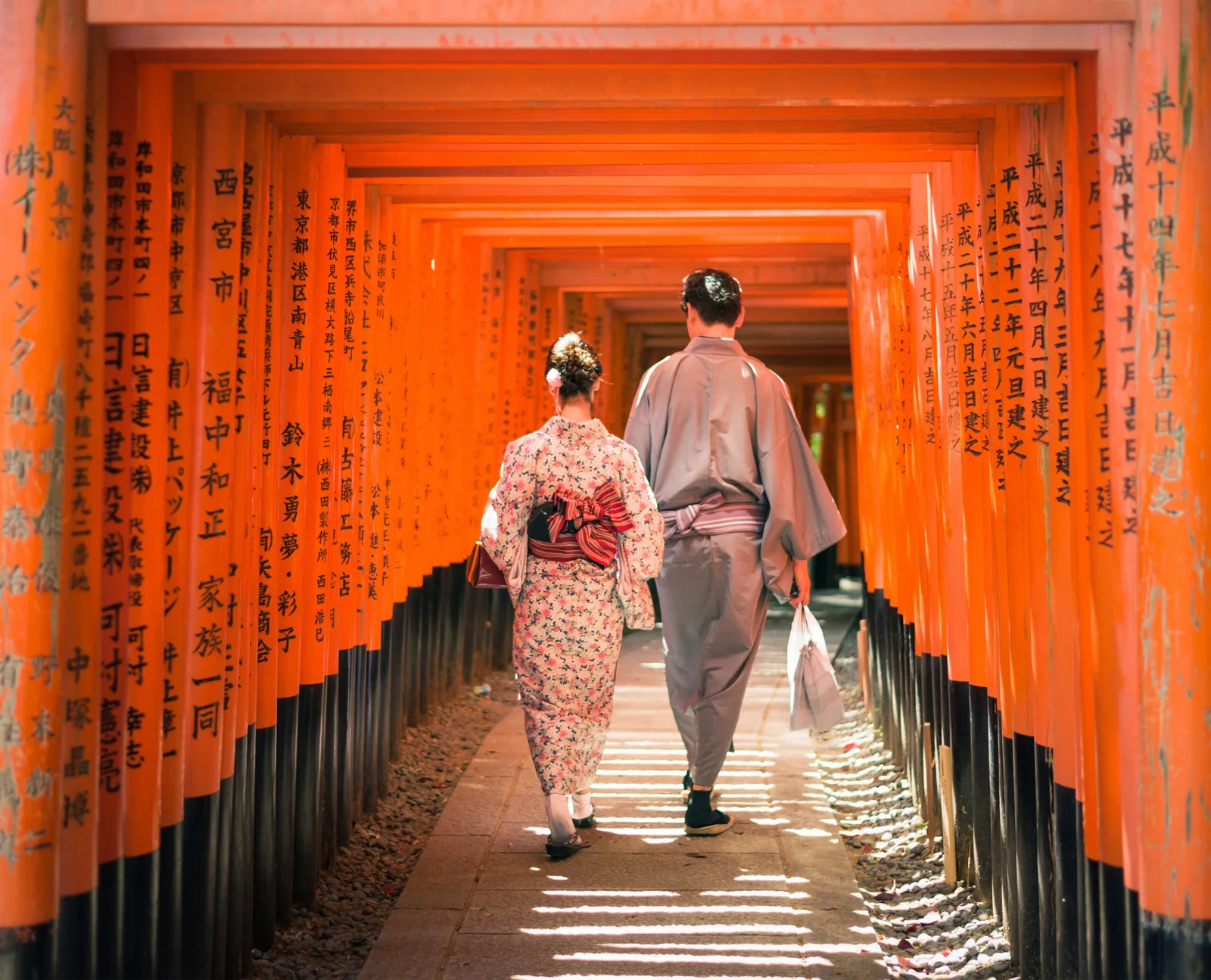
After the vast plains of Central Asia, the peaks of the Himalayas and the dense forests of Indochina, a long, narrow strip of land rises in the middle of the Pacific, capable of producing a culture unique in the history of the world.
We are talking about Japan, a cluster of islands where, according to local tradition, the star that lights and warms the planet makes its home.
In this article we try to highlight a few elements of Japanese culture, between tradition and modernity, that have helped feed the genuine myth of Japan the world over.
Samurai, the warrior knights with noble hearts
Who has never seen those rather dark and sinister suits of armour, made up of iron mail, a showy helmet covering the whole face and a sharpened katana?
We are talking about the samurai, historical figures who now populate films, TV series and books, but who wrote whole pages of Japanese history.
But who really were the samurai, and why have they become almost mythological figures?
They were members of a warrior caste of Feudal Japan, in some respects similar to the knights of medieval Europe. Their task was to serve their “Daimyo”, the lord to whom they owed total respect and obedience.
What makes the samurai unique is that they followed a code of honour based on loyalty and respect for authority. Breaking that code was a deeply dishonourable act and could even lead to death.
The samurai died out towards the end of the 1800s, as Japan opened up to modernity, but they have remained very much alive in the collective imagination, giving rise to books and film sagas, among them the blockbuster “The Last Samurai”, in which the hero is played by the celebrated actor Tom Cruise.
The Pop soul of the Land of the Rising Sun
Shops full of manga (for those who don’t know, the Japanese version of the comic book) from every era, objects and gadgets from the most iconic cartoons, video games from recent decades, soft toys and costumes of the most acclaimed heroes: Japan is, among other things, a phantasmagorical “bazaar” devoted to fun and fantasy.
The so-called Millennial generation in particular (those born between the early Eighties and the mid-Nineties) grew up with Japanese cartoons and the famous consoles: who doesn’t remember the legendary Game Boy, the portable “little box” of fun, followed by the unforgettable Nintendo 64?
Even today, strolling through the streets of Tokyo’s Harajuku district, you come across charming reproductions of Super Mario, Yoshi, Saint Seiya and Dragon Ball, to name but a few.
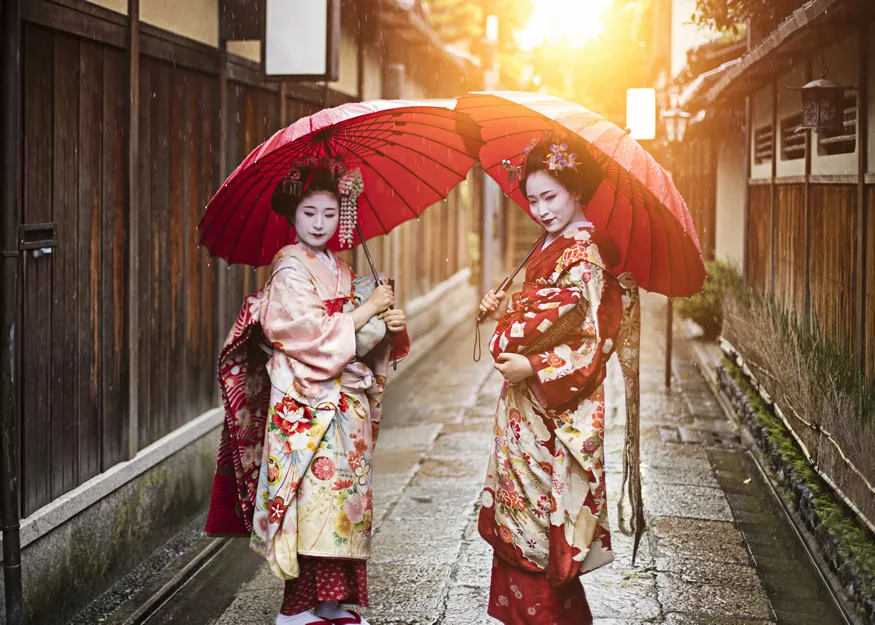
On the capital’s extremely busy metro, it is not hard to spot people dressed to the nines leafing through the manga of the moment, the one everyone is talking about. Among plush toys of every shape and colour and Maneki Neko of all sizes, one grasps one of the greatest secrets of Japanese culture: the marriage of tradition and modernity, of respect for etiquette and a love for the lighter side of life.
“Hanami”, nature’s fleeting spectacle
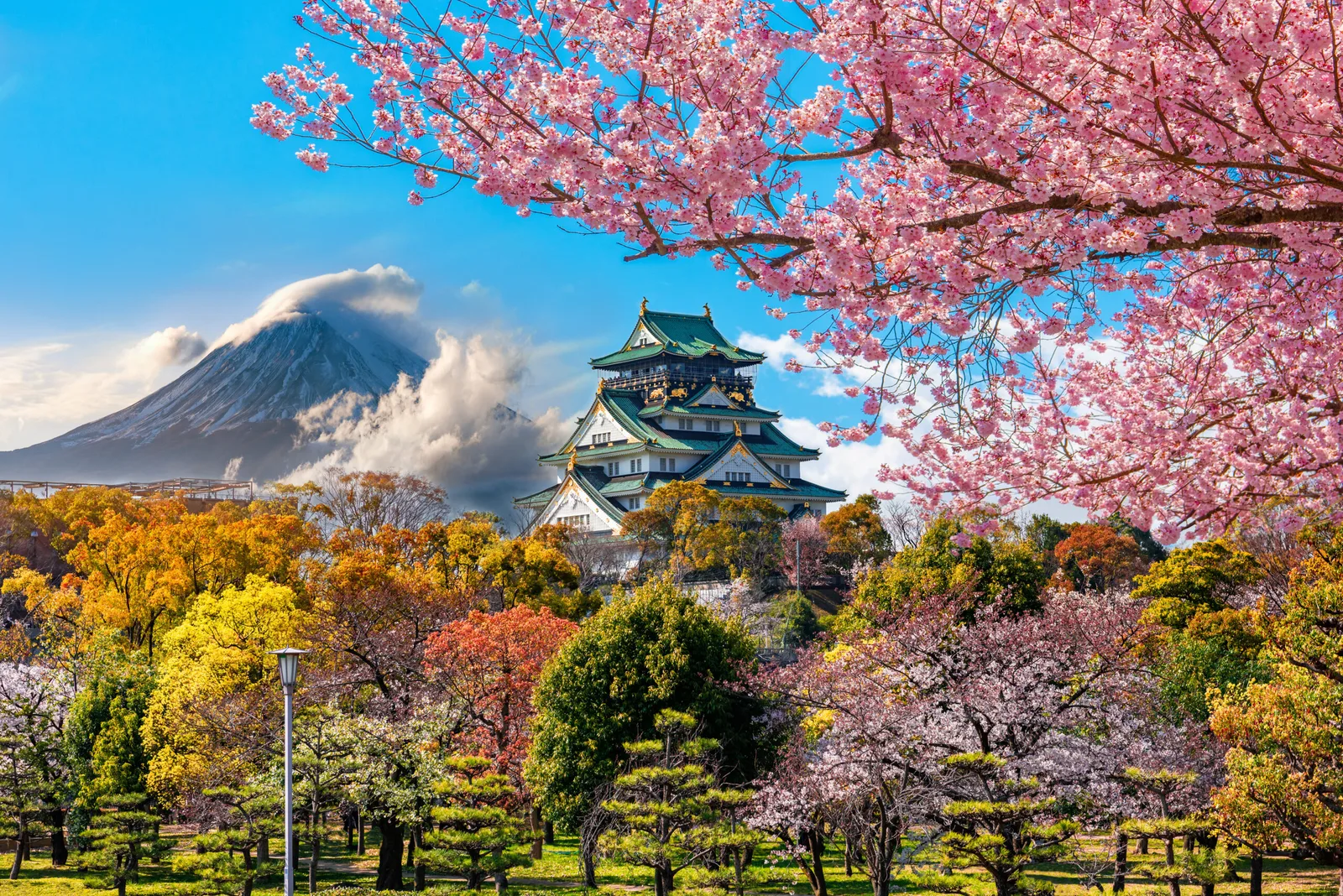
In spring Japan dresses in pink. From Hokkaido southwards, the fantastic spectacle of the cherry trees in blossom fills the pages of travel magazines and Instagram posts.
This is not merely something beautiful to look at, but a kind of ritual with deep roots in the soul of the country. Hanami, which lasts only a short while, is in fact the symbol of the transience of life, splendid but brief.
The lesson the Japanese draw from it is therefore to enjoy as fully as possible the spectacle offered by nature. That is why it is easy to see parks and green spaces full of people intent on picnicking or lying back for a few hours, their gaze turned to the beautiful colours clothing the trees.
The Shinkansen, the legend of industrious, hard-working Japan
First of all came the Shinkansen. The year is 1964 and Japan is the first to launch a high-speed railway line linking the two cities of Tokyo and Osaka. Barely two decades after the end of the Second World War, Japan inaugurates a model that becomes an iconic symbol of the modernity and efficiency of Made in Japan.
Shinkansen trains (the name translates as “bullet train”) reach a speed of no less than 320 km/h and are the safest, fastest and cheapest way of exploring the country.
On board, the travel experience is all about comfort: the trains are equipped with a wide range of services, including comfortable seats, numerous vending machines and dining cars.
What has become a stereotype, perhaps even an overworked one, namely the legend of Japanese punctuality, springs precisely from the conviction that not a single Shinkansen service ever records so much as a minute’s delay!
Sushi, the exportable brand of Japanese cuisine
Food is culture and, as such, is a fundamental ingredient in understanding the history of a people and of the nation that is home to them.
In recent decades we have witnessed a veritable “boom” in Japanese cuisine: sushi, sashimi, tempura, to mention only a few of its most famous dishes.
And as sushi & ramen bars, “all you can eat” restaurants and the like multiply all over the world, one begins to suspect that, even before being a delight for the palate, Japanese cuisine has become a genuine mass phenomenon!
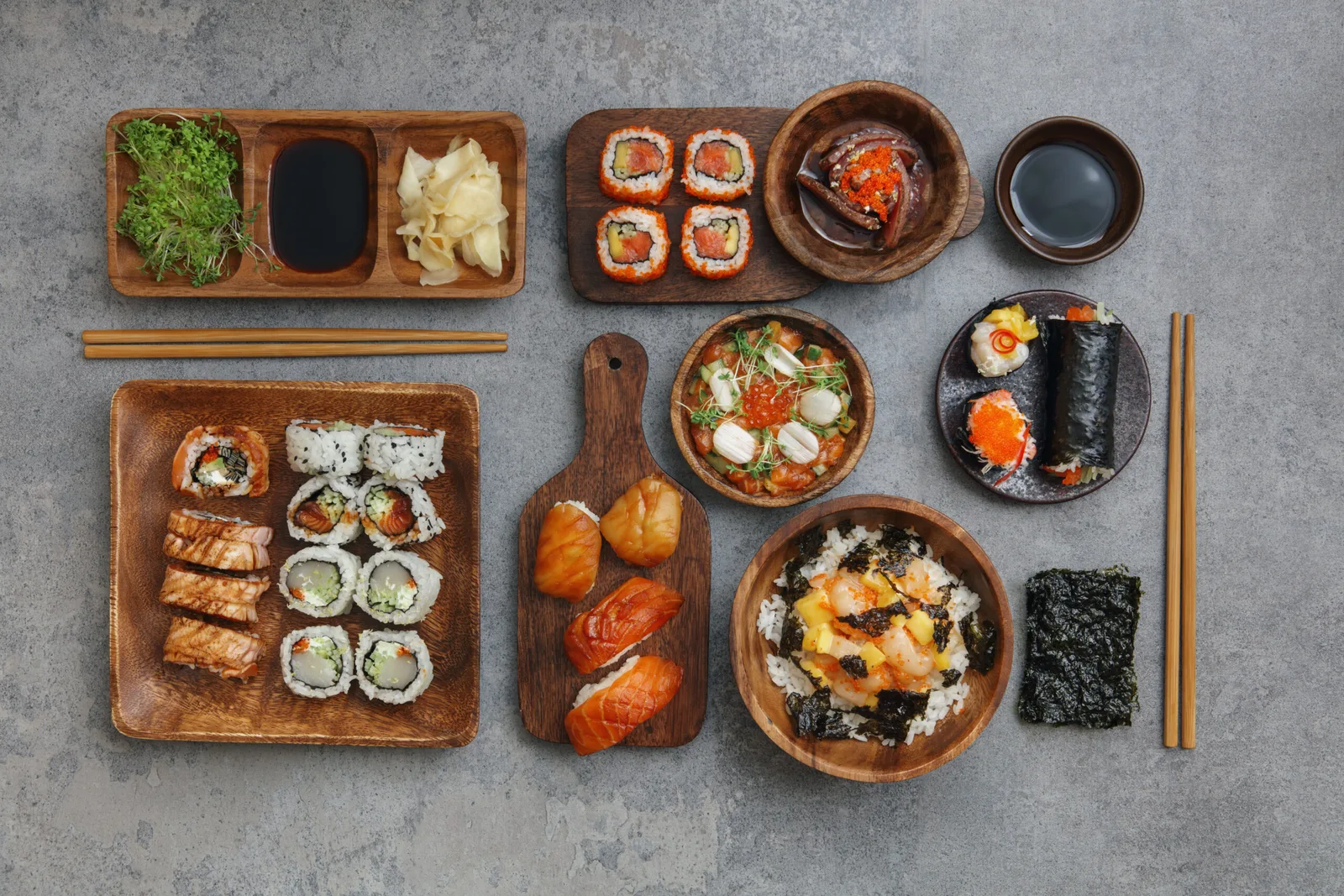
Let us start with aesthetics: sushi, as it is prepared and presented to diners, is pleasing to the eye too. After all, we eat with our eyes as well.
What not everyone knows, however, is that sushi does not only mean raw fish and, above all, is not associated solely with fish. There are in fact preparations in which the fish is cooked, and others in which the main ingredients, besides rice, are vegetables, eggs and seaweed.
Eating sushi in Japan is moreover a real experience to be tried. You sit at a counter, on the other side of which the chef prepares everything before the customers’ eyes. Among the ingredients that never fail to appear in the specialities on offer are salmon, tuna, egg, tuna belly and prawn, all to be accompanied by tea, water, beer or a good sake, the Japanese alcoholic drink obtained by fermenting rice with koji spores.
The Onsen: wellness and relaxation in Japan
The word “onsen” means hot spring. Indeed, when you consider that Japan sits within the “Pacific Ring of Fire”, it is no surprise that there are more than 2,500 springs scattered across the country.
But what does it mean to bathe in a Japanese hot spring?
The rules to follow are centuries old and allow no exceptions: first of all, men and women head for separate pools.
Bathers are handed two small towels and the keys to a changing room. You take off all your clothes (every last one!) and take a shower to wash the body before immersing yourself in the pool.
This custom serves not only a hygienic purpose but a purifying one too. The final soak in the onsen is meant to relax you and help you find a little inner peace. In short, an experience not to be missed if you want to understand a little more of the deep mystery of Japan!
Why choose a Guiness Travel Tour
For us at Guiness, a journey is a wonderful frame of life.
Our aim is not to “show” places, but to accompany travellers as they immerse themselves fully in the culture and beauty of their chosen destination.
All our itineraries are 100% independently planned, carefully designed and tested for over 30 years, thus allowing the product to evolve constantly, reaching a high, wide-ranging cultural level and guaranteeing maximum comfort in the services on the ground.
This is why we created the Guiness Exclusive Tour:
a unique travel experience, mindful of sustainability and rich in experiences, designed to give you maximum comfort, leaving you free to think of nothing but enjoying the moment.
Every one of our trips comes with guaranteed extras:
- Tour leader departing from Italy and accompanying the group for the whole duration of the tour
- Exclusive departures with a limited number of places
- Departures possible from all over Italy
- 24-hour assistance on every departure
- Cancellation without penalty up to 45 actual days before departure
- No surprise extra costs on arrival
- Free minibar service on board the coaches (guaranteed in all the countries visited)
Click HERE and discover the WONDERFUL JAPAN Tour
Team
Guiness Travel T.O.

'%3e%3cg id='Final-Copy-2_2_' transform='translate(1275.000000, 200.000000)'%3e%3cpath class='st0' d='M7.4,12.8h6.8l3.1-11.6H7.4C4.2,1.2,1.6,3.8,1.6,7S4.2,12.8,7.4,12.8z'/%3e%3c/g%3e%3c/g%3e%3c/g%3e%3cg id='final---dec.11-2020'%3e%3cg id='_x30_208-our-toggle' transform='translate(-1275.000000, -200.000000)'%3e%3cg id='Final-Copy-2' transform='translate(1275.000000, 200.000000)'%3e%3cpath class='st1' d='M22.6,0H7.4c-3.9,0-7,3.1-7,7s3.1,7,7,7h15.2c3.9,0,7-3.1,7-7S26.4,0,22.6,0z M1.6,7c0-3.2,2.6-5.8,5.8-5.8 h9.9l-3.1,11.6H7.4C4.2,12.8,1.6,10.2,1.6,7z'/%3e%3cpath id='x' class='st2' d='M24.6,4c0.2,0.2,0.2,0.6,0,0.8l0,0L22.5,7l2.2,2.2c0.2,0.2,0.2,0.6,0,0.8c-0.2,0.2-0.6,0.2-0.8,0 l0,0l-2.2-2.2L19.5,10c-0.2,0.2-0.6,0.2-0.8,0c-0.2-0.2-0.2-0.6,0-0.8l0,0L20.8,7l-2.2-2.2c-0.2-0.2-0.2-0.6,0-0.8 c0.2-0.2,0.6-0.2,0.8,0l0,0l2.2,2.2L23.8,4C24,3.8,24.4,3.8,24.6,4z'/%3e%3cpath id='y' class='st3' d='M12.7,4.1c0.2,0.2,0.3,0.6,0.1,0.8l0,0L8.6,9.8C8.5,9.9,8.4,10,8.3,10c-0.2,0.1-0.5,0.1-0.7-0.1l0,0 L5.4,7.7c-0.2-0.2-0.2-0.6,0-0.8c0.2-0.2,0.6-0.2,0.8,0l0,0L8,8.6l3.8-4.5C12,3.9,12.4,3.9,12.7,4.1z'/%3e%3c/g%3e%3c/g%3e%3c/g%3e%3c/g%3e%3c/svg%3e) Cookie preferences
Cookie preferences